A landlord recommendation letter is a short reference from a current or former landlord about your tenancy. It can support a rental application by describing facts such as your rental dates, payment history, and care of the property. If you are requesting an emotional support animal accommodation, a landlord reference is different from an ESA letter and does not replace documentation from a licensed mental health professional.
Quick answer: Ask a landlord who knows your tenancy to confirm objective rental history. Keep the request specific, give a deadline, and let the landlord choose whether to provide a reference. For an ESA housing request, organize the landlord reference separately from the letter created after an individualized evaluation by a licensed clinician.
What is a landlord recommendation letter?
A landlord recommendation letter, also called a landlord reference or rental reference, is a written statement about a tenant’s prior rental conduct. It is usually prepared for a prospective landlord, property manager, or rental screening file. The writer should stick to information they can support, such as the lease period, rent-payment record, communication, and the condition in which the property was left.
What should a landlord recommendation letter include?
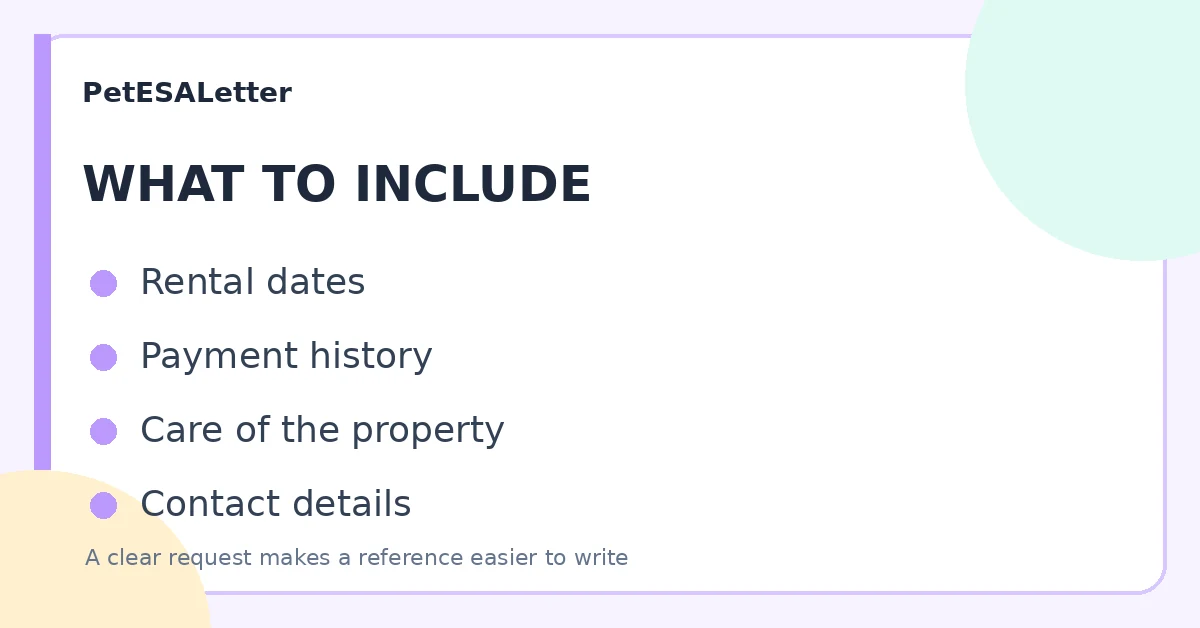
A useful reference is concise and factual. It should identify the writer’s role, the rental address or property (without unnecessary personal information), the tenancy dates, and the writer’s preferred contact method. If accurate, the writer may describe on-time payments, compliance with lease terms, reasonable communication, cleanliness, and documented care of the home. A landlord should not be pressured to make statements they cannot verify.
Section
Helpful detail
Relationship
Writer’s name, title, and connection to the rental
Tenancy
Move-in and move-out dates, if known
History
Rent-payment and lease-compliance facts the writer can verify
Contact
A business email or phone number for follow-up
← swipe to compare →
How do you ask a landlord for a reference letter?
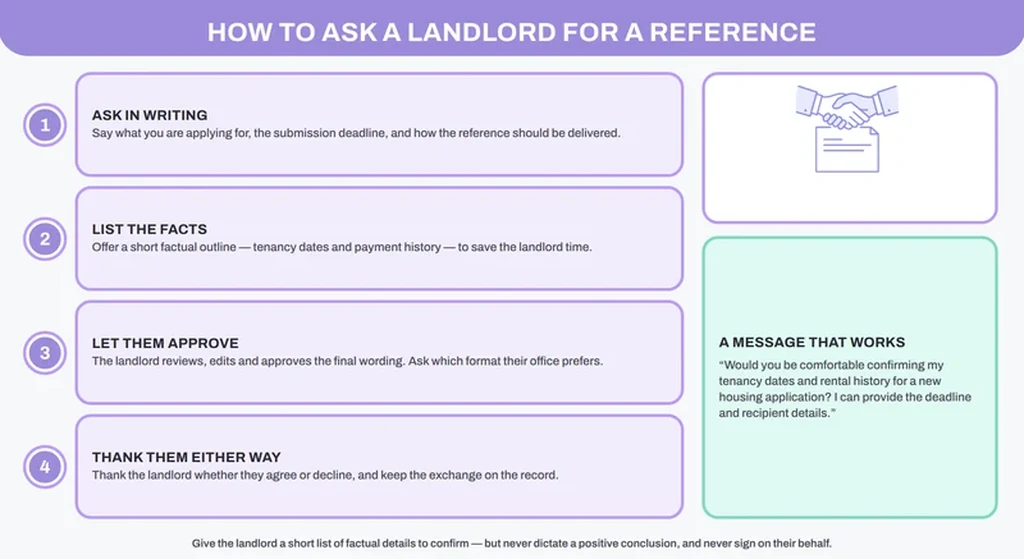
Ask in writing and explain what you are applying for, the submission deadline, and how the reference will be delivered. Give the landlord a short list of factual details to confirm, but do not dictate a positive conclusion. A simple message can say: “Would you be comfortable confirming my tenancy dates and rental history for a new housing application? I can provide the deadline and recipient details.” Thank the landlord whether they agree or decline.
Can a tenant write a draft for a landlord to review?
You can offer a factual outline to save time, but the landlord should review, edit, and approve the final wording before sending it. Do not sign for the landlord or create a reference that appears to come from them without permission. A property manager may also have a standard verification process, so ask which format they prefer.
How is a landlord reference different from an ESA letter?
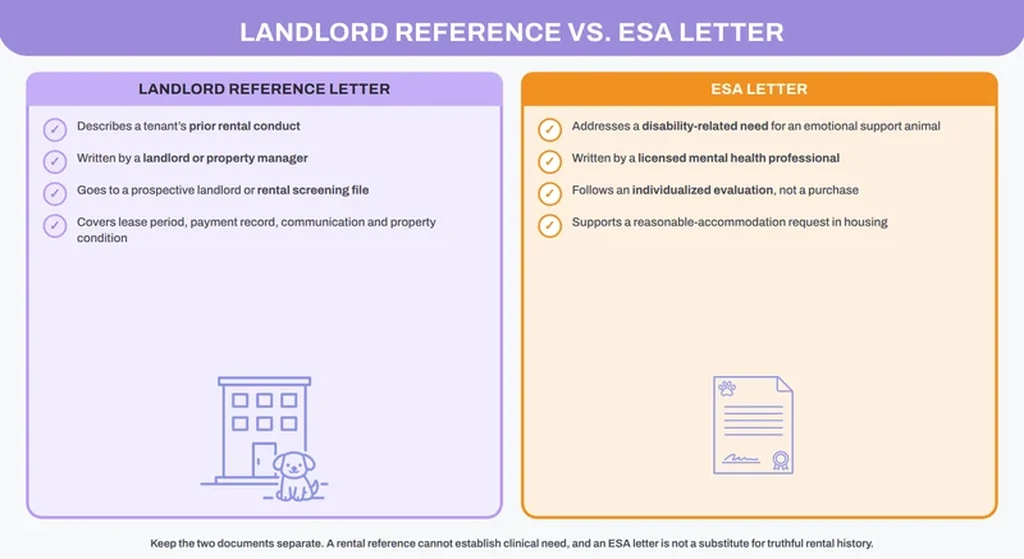
The documents serve different purposes. A landlord reference describes a tenant’s rental history. An ESA letter addresses a person’s disability-related need for an emotional support animal after an individualized evaluation by a licensed mental health professional. A landlord reference cannot establish clinical need, and an ESA letter is not a substitute for truthful rental-history information. Keep the documents separate when preparing a housing application or accommodation request.
How to organize housing documents before applying
Create a simple folder with your rental application, identification, income records, prior landlord contact details, and any reference letters. If you are also considering an ESA housing request, keep the clinician’s letter in a separate section and share only the documents requested for the process. Read our step-by-step ESA letter guide and review housing documentation considerations for context.
Common mistakes to avoid
Avoid submitting a reference with unexplained gaps, unverifiable claims, or a landlord’s private information that is not needed. Do not confuse a rental reference with an ESA registry, certificate, or online badge: there is no official federal ESA registry that establishes disability-related need. If you want to understand whether an ESA letter may fit your situation, start with a licensed professional evaluation rather than a registration purchase.
It is a short written reference from a current or former landlord describing verifiable parts of a tenant’s rental history. It may help a prospective landlord assess an application, but the writer decides whether to provide it and what facts they can support.
It can state the tenancy dates, the writer’s role, and accurate information about rent payments, lease compliance, communication, and property care. The letter should use objective language, avoid unnecessary personal information, and include a way for the recipient to verify the writer’s identity.
Send a courteous written request with the deadline, recipient instructions, and the facts you hope the landlord can confirm. Give the landlord an easy way to decline. If the property manager uses a verification form or portal, follow that process instead of requesting a separate letter.
A landlord reference can provide rental-history context, but it does not document disability-related need for an emotional support animal. That question is evaluated by a licensed mental health professional. Keep the reference and any clinician documentation separate, and follow the housing provider’s stated request process.
No. A landlord recommendation letter discusses tenancy and rental conduct. An ESA letter is clinical documentation created after an individualized evaluation by a licensed mental health professional. Neither document should be presented as the other, and neither creates a universal outcome for a housing application.
Curious whether your pet could be recognized as an emotional support animal? It comes down to your own clinical need, not the breed — and a licensed professional is the only one who can make that call.
• Any breed can qualify — eligibility is based on you, not your pet
• A short assessment with a licensed clinician tells you where you stand
• No registries or certificates involved at any point
Darren is a leading expert in mental health advocacy and assistance animal documentation. He specializes in streamlining the process for obtaining ESA Letters, PSD Letters, and State-specific ESA compliance.