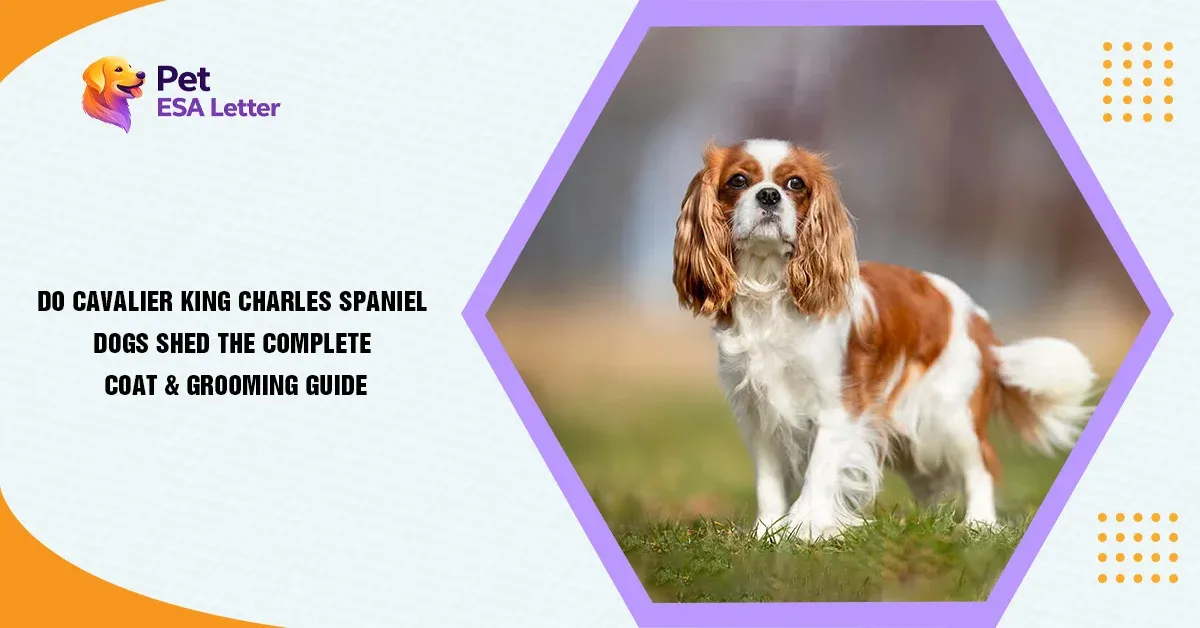
Do Cavalier King Charles Spaniel Dogs Shed? The Complete Coat & Grooming Guide
Last Updated on: August 14, 2026
Reviewed by Darren Andrew Rafel
Licensed Agent
@ Petesaletter
Cavalier King Charles Spaniels carry themselves like tiny royals — silky ears, soulful eyes, and a coat that looks like it belongs in a portrait gallery. That elegance, though, comes with a maintenance bill your sofa will notice long before your guests do.
Quick Answer
Yes, Cavalier King Charles Spaniel dogs shed. They carry a moderate, year-round shedding level that ramps up noticeably during two seasonal “coat blows” each year. Unlike wiry or double-coated breeds, Cavaliers don’t need professional clipping to manage it; consistent brushing several times a week is what actually keeps the hair under control.
If you’ve landed here Googling “do Cavalier King Charles Spaniels shed a lot,” the honest answer sits in the middle of the scale — not the tumbleweeds-of-a-Husky category, but well past the low-shed reputation some breeders imply. What actually determines how much hair ends up on your rug is coat type, hormones, and season, and that’s exactly what we’re breaking down below.
Understanding the Cavalier King Charles Spaniel Coat
Do Cavalier King Charles Spaniels Have a Single or Double Coat?
Breed standards describe the Cavalier as having a silky, moderately long coat with feathering on the ears, chest, legs, and tail — technically a single-coat profile, without the dense, cottony undercoat you’d find on a Sheltie or Corgi.
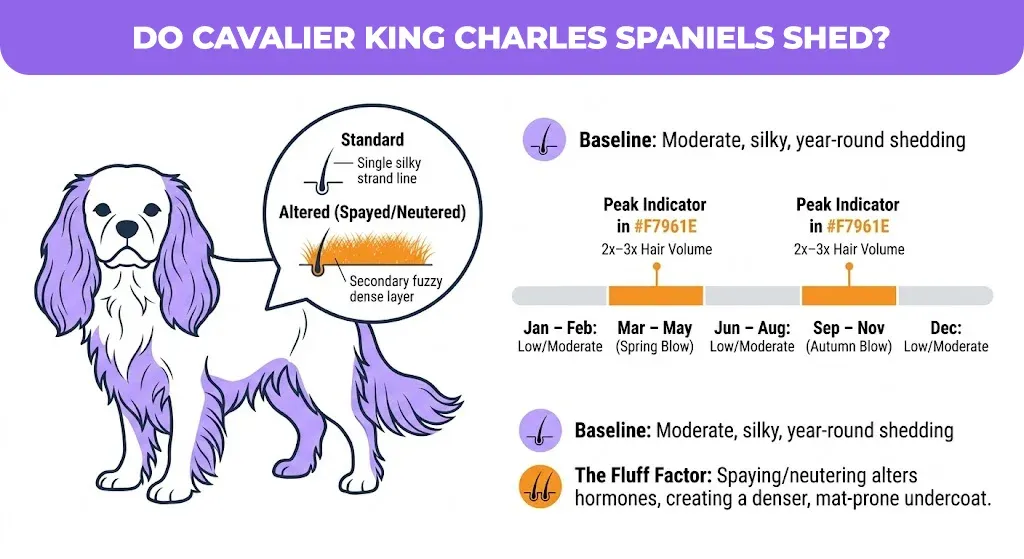
In practice, plenty of companion Cavaliers don’t read the standard. Many develop a soft, fluffy undercoat variation underneath the silky topcoat, especially after spaying or neutering. Altering a dog changes hormone levels, and lower hormone activity is strongly linked to a thicker, fuzzier secondary layer that traps loose hair and mats more easily than the show-standard coat ever would.
Groomer’s note: If your Cavalier’s coat feels noticeably fluffier and denser than photos of show dogs suggest it should, don’t assume something is wrong — you’re very likely looking at the neuter/spay-related undercoat variation, not a health issue.
How Much Does a Cavalier King Charles Shed?
Day to day, Cavaliers are moderate, consistent shedders; you’ll find fine, silky hairs on dark clothing and furniture year-round, but not in dramatic clumps. That baseline shifts hard twice a year during the Cavalier King Charles Spaniel shedding season, when the coat “blows” as daylight and temperature shift in spring and autumn.
During those seasonal windows, expect two to three times the normal hair volume for several weeks as the undercoat releases in bulk. This is the single biggest driver behind complaints that a Cavalier sheds “a lot” — most of the year they don’t, but the seasonal blow is real and worth planning around.
Complete Cavalier King Charles Spaniel Grooming Guide
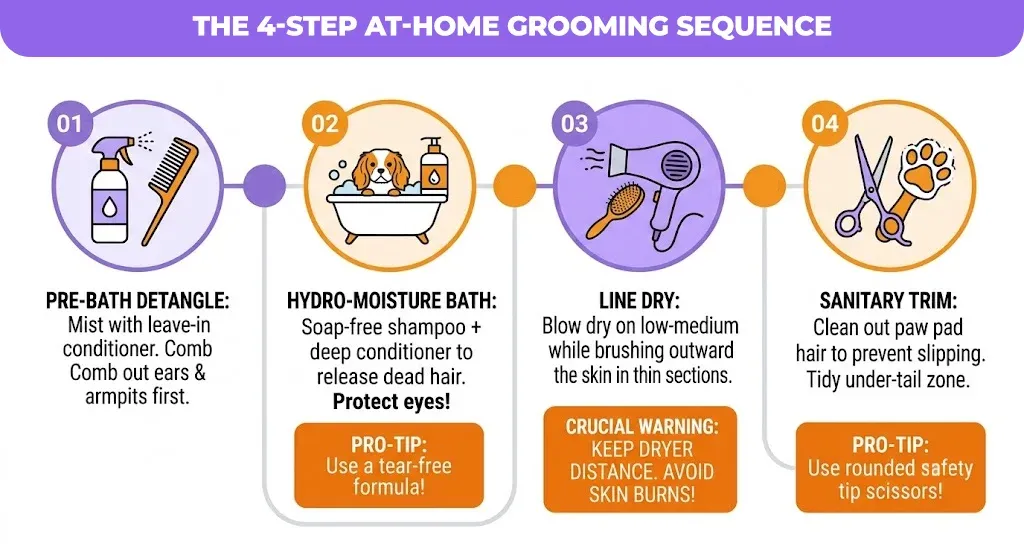
Grooming a Cavalier King Charles Spaniel’s coat isn’t about fighting the shedding — it’s about intercepting loose hair in the tub and on the brush before it ever reaches your floor. Here’s the exact sequence groomers use for grooming a Cavalier King Charles Spaniel at home.
Step 1: The Pre-Bath Detangle
Mist a leave-in conditioning spray through the coat first — dry feathering breaks under a brush far more easily than damp, protected hair. Work a stainless steel greyhound comb and a slicker brush gently through the ear feathering, chest, legs, and tail, checking for hidden mats behind the ears and in the armpits.
Step 2: Bathing & Hydro-Moisture
Use a soap-free canine shampoo followed by a deep-moisture conditioner. Keep both well away from the eyes. Cavaliers’ large, prominent eyes are easily irritated, so a tear-free formula and a cupped hand as a shield around the face go a long way. The conditioning step is what actually releases dead undercoat hair into the tub instead of onto your rugs.
Step 3: Blow Drying & Line Brushing
Dry on a low-to-medium heat setting while line brushing — working a pin brush through the coat in thin horizontal sections from skin outward. This keeps the silky topcoat straight and prevents the fluffy undercoat from felting into mats as it dries.
Step 4: Trimming the Sanitary Zones
Trim the hair between the paw pads so your Cavalier isn’t slipping on hard floors, and tidy the sanitary area under the tail. Be gentle around the ear leather itself; it’s thin and easily nicked, so scissors work only on the feathering, never the skin underneath.
Popular Cavalier King Charles Spaniel Grooming Styles
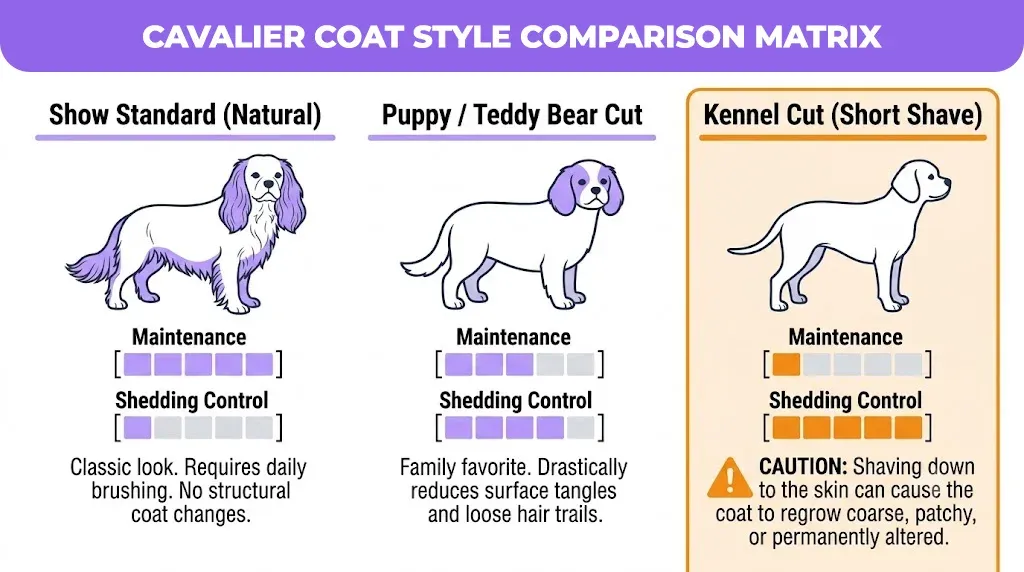
Choosing among Cavalier King Charles Spaniel grooming styles is really a choice about how much brushing time you’re willing to give back each week.
The Show Standard Look (Natural Feathering)
Zero clipping or shaving on the body. This preserves the breed’s classic silhouette but demands the highest volume of coat care — daily brushing is non-negotiable at this length.
The Puppy Cut / Teddy Bear Cut
Clipping the body to an even one to two inches while rounding the face softens the maintenance curve dramatically. Tangling drops off fast at this length, and visible shedding around the house becomes far easier to manage.
The Kennel Cut (Short Summer Shave)
Warning: Shaving a Cavalier down to the skin can permanently change the coat’s texture when it regrows, particularly on dogs carrying a heavier undercoat. The silky topcoat can come back coarser or patchier. Reserve a full kennel cut for genuine heat-management or matting emergencies, not routine upkeep.
Grooming Style
Best For
Maintenance Level
Shedding Impact
Show Standard (Natural Feathering)
Owners who want the classic breed silhouette
High — daily brushing
No reduction; hair is simply managed
Puppy Cut / Teddy Bear Cut
Busy households wanting less tangling
Moderate — 2–3x weekly brushing
Noticeably reduces visible shedding
Kennel Cut (Short Summer Shave)
Hot climates or heavy seasonal shedders
Low short-term, but coat may regrow altered
Temporary drop in loose hair volume
Pro Tips to Control Cavalier Shedding
Dietary support: Omega-3 and Omega-6 fatty acids (fish oil, salmon-based diets) strengthen hair follicles and reduce brittle, easily shed strands.
The right tool: A slicker brush and greyhound comb are safe for the silky coat; skip harsh de-shedding blades, which can shear and damage the delicate feathering rather than simply lifting loose undercoat.
Frequency baseline: Brush three to four times a week outside of shedding season, and near-daily during the spring and autumn blow.
Routine vet checks: Sudden increases in shedding outside the normal seasonal pattern can flag thyroid or skin issues worth mentioning at your next visit.
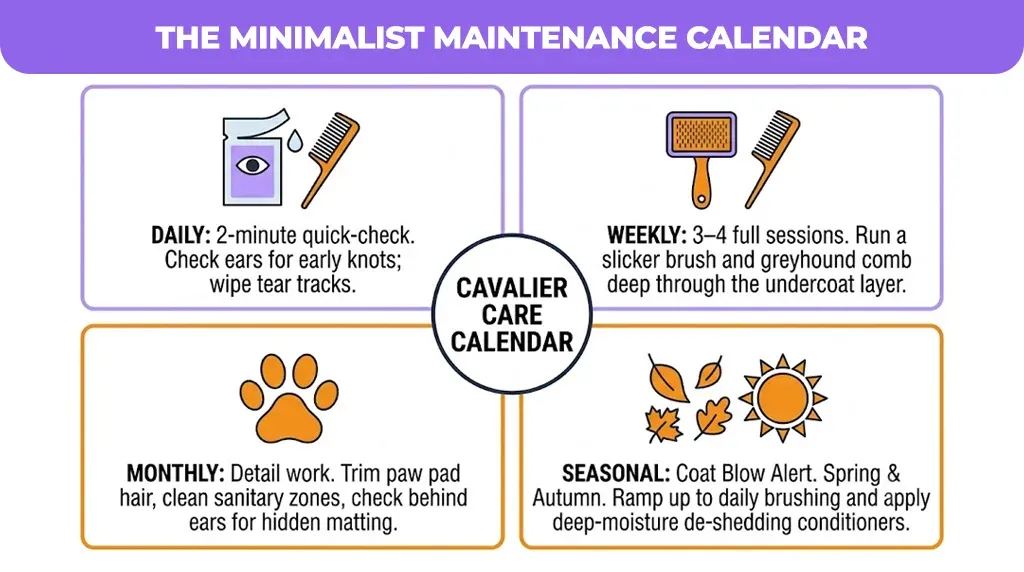
Year-Round Cavalier Maintenance Calendar
Frequency
Task
Daily
Quick check of the ear feathering, chest, and legs for early tangles; wipe eye area.
Weekly (3–4x)
Full slicker-brush and comb session through the feathering, undercoat area, and tail.
Monthly
Trim paw-pad hair and sanitary areas; inspect for matting behind the ears and in the armpits.
Seasonal (Spring & Autumn)
Increase brushing to near-daily during the shedding season as the undercoat “blows”; consider a bath with a de-shedding conditioner.
Conclusion
Cavaliers do shed — moderately, year-round, and heavily during two seasonal windows — but nothing about that is unmanageable with a regular brushing routine and the right tools. Most owners find the trade-off is an easy one once you weigh it against that famously affectionate, velvet-eared temperament.
Curious whether your pet could be recognized as an emotional support animal? It comes down to your own clinical need, not the breed — and a licensed professional is the only one who can make that call.
🐾 Any breed can qualify — eligibility is based on you, not your pet
🐾 A short assessment with a licensed clinician tells you where you stand
🐾 No registries or certificates involved at any point
Beyond the grooming commitment, Cavaliers are prone to a handful of breed-specific health concerns, most notably mitral valve disease (MVD) and, less commonly, syringomyelia. Both warrant regular veterinary monitoring. Their affectionate nature also means they don’t tolerate being left alone for long stretches — separation anxiety is a common downside owners underestimate.
Heavy double-coated breeds like Siberian Huskies, German Shepherds, and Alaskan Malamutes top the list, blowing their entire undercoat in dense clumps twice a year. A Cavalier’s shedding is moderate by comparison — steady but far lighter than those heavy seasonal blowers.
Not typically. Cavaliers were bred as companion lapdogs for the whole household and tend to bond broadly rather than fixating on a single person, making them a strong fit for families rather than one-on-one guardian-type breeds.
Neither sex is objectively “better”; differences are subtle. Males often run slightly larger and can be marginally more affectionate or clingy, while females are sometimes described as more independent. One consistent factor is coat-related: spaying or neutering either sex can trigger the fuzzier undercoat variation discussed earlier, so the timing of that procedure matters more than which sex you choose.
Your Cavalier provides unmatched emotional comfort. Let us secure their place in your home. While you manage their weekly brushing routine and seasonal coat blows, Pet ESA Letter safely manages the legal groundwork for your peace of mind.
🐾 100% Risk-Free Guarantee (Full refund if your letter is not approved)
🐾 Real Consultations with State-Licensed Mental Health Professionals
🐾 Fully Compliant with HUD, FHA, and Modern Housing Standards
Darren is a leading expert in mental health advocacy and assistance animal documentation. He specializes in streamlining the process for obtaining ESA Letters, PSD Letters, and State-specific ESA compliance.