Most dogs nap on command. A Brittany spaniel treats a sunny afternoon like an open invitation to find a bird, point at it, and wait for someone to be impressed. That restless, joyful intensity is the breed’s calling card — a dog built for fieldwork who somehow also ends up curled against your leg by nine o’clock at night.
If you’re researching the Brittany spaniel because you want a hunting partner, a running buddy, or simply a dog with personality to spare, this guide walks through everything that matters: where the breed comes from, what daily life with one actually looks like, how to feed and groom them, the health issues to watch for, and how to find a Brittany spaniel puppy — or a rescue dog — the right way.
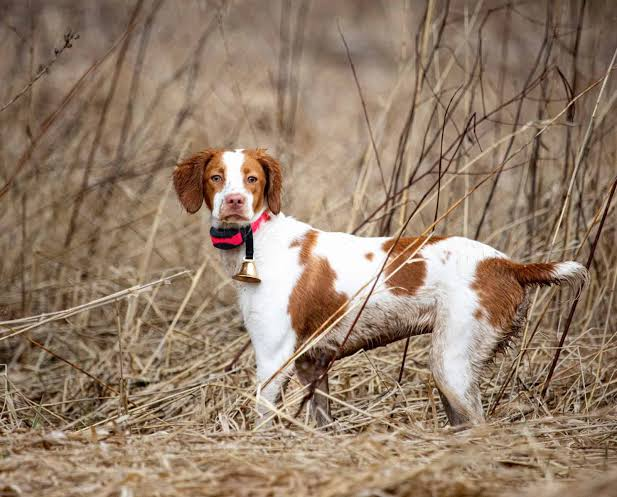
The Brittany Spaniel is renowned for its intense focus and athletic frame in the field.
What Is a Brittany Spaniel? History and Characteristics
To understand what a Brittany spaniel is, you have to start in the rolling countryside of Brittany, in northwestern France, where the breed was developed by local hunters in the 19th century. They needed a dog compact enough to work close, fast enough to cover ground, and skilled enough to handle both feathered game and tough terrain on a farmer’s budget — not the deep pockets of the French nobility who kept larger pointing breeds.
The result was a dog Brittany spaniel enthusiasts still recognize today: a tight, athletic, almost wiry build with a dense, flat or slightly wavy coat, most commonly seen in orange and white or liver and white patterns. According to the American Kennel Club (AKC) breed standard, a Brittany stands 17.5 to 20.5 inches at the shoulder and weighs 30 to 40 pounds — a frame built for endurance over a full day in the field, not raw power.
French Brittany vs. American Brittany
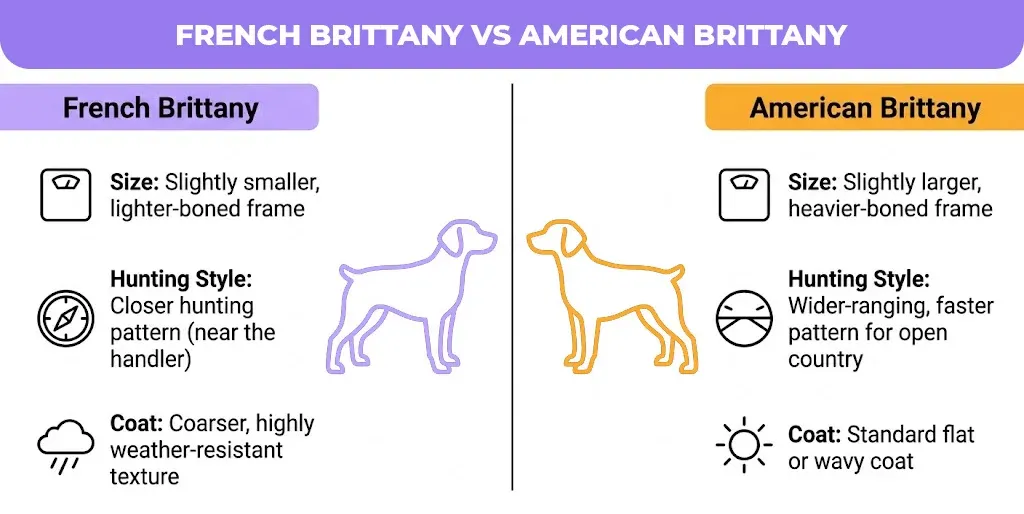
One distinction worth knowing before you start looking at Brittany spaniel puppies: the French Brittany spaniel and the American-bred Brittany have diverged slightly over decades of separate breeding programs.
Size: French lines tend to run a touch smaller and lighter-boned than American show and field lines.
Hunting style: French Brittanys are often bred to hunt closer to the handler, while American lines have been selectively bred for a wider-ranging, faster pattern suited to big open country.
Coat: French dogs frequently carry a slightly coarser, weather-resistant coat developed for a damper climate.
Neither version is “more correct”; they simply reflect different hunting traditions, and most companion owners will be perfectly happy with either style of Brittany.
Temperament and Household Fit: Are Brittany Spaniels High Maintenance?
Here’s the honest answer: a Brittany spaniel is high maintenance in exactly one way — energy — and low maintenance in almost every other way that matters.
Brittanys were bred to run all day, and that drive doesn’t disappear just because the dog lives in a suburban backyard instead of a French hedgerow. Without an outlet, that energy turns into chewed baseboards, dug-up flowerbeds, or a dog that paces and whines through dinner.
Exercise and Mental Stimulation
Plan on 1 to 2 hours of vigorous activity daily — running, hiking, fetch, or actual fieldwork.
Mental stimulation matters as much as physical exercise: scent games, obedience training, and puzzle feeders all help burn off the breed’s famously sharp mind.
A securely fenced yard helps, but it is not a substitute for real exercise; Brittanys are escape artists when bored.
Vocalization and Socialization
Brittanys are not constant barkers by nature, but they are alert dogs that notice everything. Without early socialization and consistent training, that alertness can curdle into nuisance barking, especially in dogs left alone for long stretches or under-exercised. Early exposure to different people, sounds, and environments keeps that natural watchfulness from becoming a problem behavior.
Family and Multi-Pet Compatibility
This is where the breed shines. Brittanys are famously gentle with children, eager to please, and generally sociable with other dogs when properly introduced. Mixed breeds like the Brittany spaniel mix (often paired with pointers, setters, or retrievers) tend to inherit this same affectionate, biddable temperament, which is part of why these crosses have grown in popularity among active families looking for a slightly different look or size.
Grooming 101: Do Brittany Spaniels Shed?
Yes — but not dramatically. If you’re wondering whether a Brittany spaniel sheds enough to matter, the honest answer is: moderately, year-round, with a heavier seasonal shed in spring and fall as the undercoat turns over.
Brushing: A thorough brush 2 to 3 times per week prevents matting, especially in the feathering on the legs, chest, and ears.
Bathing: Bathe only as needed (roughly every 6 to 8 weeks for most house dogs) — over-bathing strips natural oils from the coat.
Ear care: Because Brittanys love water and have floppy, low-airflow ears, check and dry ears after swimming to prevent moisture-related ear infections.
Nail trims: Active dogs often wear nails down naturally, but check monthly regardless.
Compared to long-haired sporting breeds like setters, Brittanys are genuinely low-maintenance in the grooming department; the time investment with this breed goes almost entirely into exercise, not brushing.
Diet and Nutrition: Feeding Your Active Dog
A working gun dog and a couch-adjacent family companion are not the same animal nutritionally, even if they’re the same breed. A Brittany’s caloric needs should scale to actual activity level, not just body weight.
Macronutrient Priorities
Protein: Look for a high-quality animal protein as the first ingredient — active sporting dogs benefit from 25–30% protein on a dry-matter basis.
Fat: Adequate fat (15–20%) fuels endurance and supports coat health; working field dogs may need more during hunting season.
Carbohydrates: Moderate, digestible carbs (sweet potato, oats, brown rice) provide sustained energy without the spike-and-crash of low-quality fillers.
Feeding by Life Stage
A Brittany spaniel puppy needs a diet formulated specifically for growing, medium-energy breeds — overfeeding puppy food or using an inappropriate calcium-to-phosphorus ratio can contribute to skeletal problems later. As the dog matures, shift to an adult active or performance formula, and again to a senior or weight-managed formula once activity naturally declines, typically around age 7 to 8.
Health and Lifespan: How Long Do Brittany Spaniels Live?
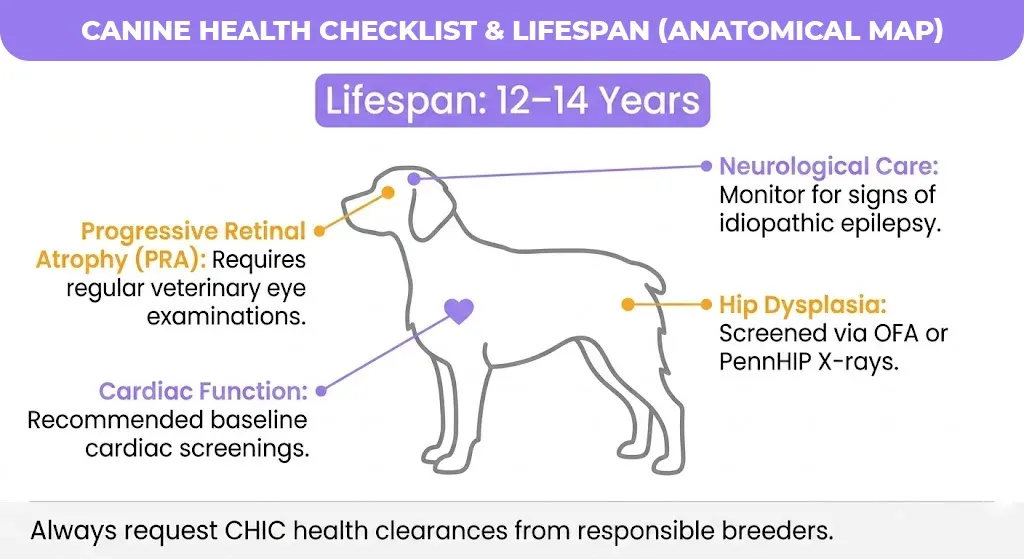
Brittanys are a generally robust breed, with an average lifespan of 12 to 14 years — solid numbers for a dog in their size class.
Common Health Risks
So what do Brittany spaniels usually die from, and what should owners screen for earlier in life? The most frequently reported issues include:
Hip dysplasia: A malformation of the hip joint that can cause arthritis and mobility issues; screening via X-ray is standard practice in responsible breeding programs.
Epilepsy: A neurological condition causing seizures, which appears in the breed at higher-than-average rates and is best managed under veterinary care.
Progressive retinal atrophy (PRA): A degenerative eye condition that gradually destroys the retina’s light-sensing cells, eventually leading to blindness.
Cancer and age-related organ decline: As with most breeds, cancer and heart or kidney decline become more common causes of death in dogs reaching their senior years.
The Canine Health Information Center (CHIC) maintains breed-specific health screening recommendations for Brittany parent dogs, generally including hip evaluations, eye examinations, and cardiac screening. Any reputable breeder should be able to produce these results on demand.
Finding Brittany Spaniel Puppies: Breeders and Selection
Once you’ve decided this breed fits your lifestyle, the next step is finding a Brittany spaniel puppy through a responsible source. This is where patience pays off.
A young Brittany puppy requires early socialization and structured routine.
Vetting Brittany Spaniel Puppy Breeders
Ask to see OFA or PennHIP hip certifications and eye clearances for both parents.
A serious Brittany spaniel breeder will ask you just as many questions — about your home, your activity level, and your experience with dogs.
Expect to meet the puppy’s parents (or at minimum see verified health and temperament documentation) and visit where the litter was raised.
Good breeders typically limit litters per dam per year and won’t pressure you into a same-week pickup.
Red Flags to Avoid
When browsing Brittany spaniel puppies for sale online, watch for warning signs of puppy mills or backyard operations: multiple breeds advertised by the same “kennel,” no health testing documentation, pressure to pay a deposit before any conversation about the dog’s background, or puppies available younger than 8 weeks.
Bringing Home Brittany Spaniel Pups
The first few weeks with Brittany spaniel pups are about routine: consistent feeding times, crate training, gentle socialization to new people and sounds, and the beginning of basic obedience. Patience here sets the tone for the dog’s behavior for years to come.
Adoption and Rescue: Giving a Brittany a Second Chance
Not every great Brittany starts as a puppy. Brittany spaniels for adoption — whether adult dogs surrendered by previous owners or dogs that didn’t work out as full-time hunting partners — are often calmer, already trained, and just as devoted as a dog raised from eight weeks old.
Dedicated Brittany spaniel rescue organizations exist specifically to place dogs of this breed (and Brittany spaniel mixes) into appropriate homes, and they typically have a strong handle on each dog’s temperament, exercise needs, and any medical history. Searching for your regional parent-club rescue network is a good starting point, and adoption fees are almost always far lower than a breeder’s puppy price while still supporting the dog’s veterinary care.
Ready to Welcome a Brittany Into Your Life?
Whether you end up bringing home a Brittany spaniel puppy from a health-tested breeder or opening your door to an adult dog through a Brittany spaniel rescue, you’re signing up for one of the most affectionate, intuitive, and capable companions in the sporting dog world. Because of their deep bond with their owners and highly empathetic nature, Brittanys also make exceptional emotional support companions for active individuals.
Need an ESA Letter for Your Brittany?
If your Brittany serves as your trusted emotional support companion, ensuring they can live and travel with you stress-free is essential. At Petesaletter, we help connect you with licensed mental health professionals to secure a legitimate, legal ESA letter hassle-free.