Most guides will tell you to get your ESA letter, give it to your landlord, and then relax. That advice is outdated. As of May 2026, a valid ESA letter still matters, but it no longer works the way it used to. Handing it over the wrong way can still get you denied.
Can a Landlord Deny an ESA Letter?
Yes, your landlord can deny an ESA letter, but only for specific reasons: the letter is fake or incomplete, the animal is a real safety risk to other people, accommodating it would cause serious financial hardship, or the property is legally exempt from the Fair Housing Act. A landlord cannot deny you just because of the animal’s breed or size, or because of a strict no-pet policy.
That said, the rules changed this year in a way that affects how much pressure a landlord actually feels to say yes.
What Can a Landlord Legally Ask For?
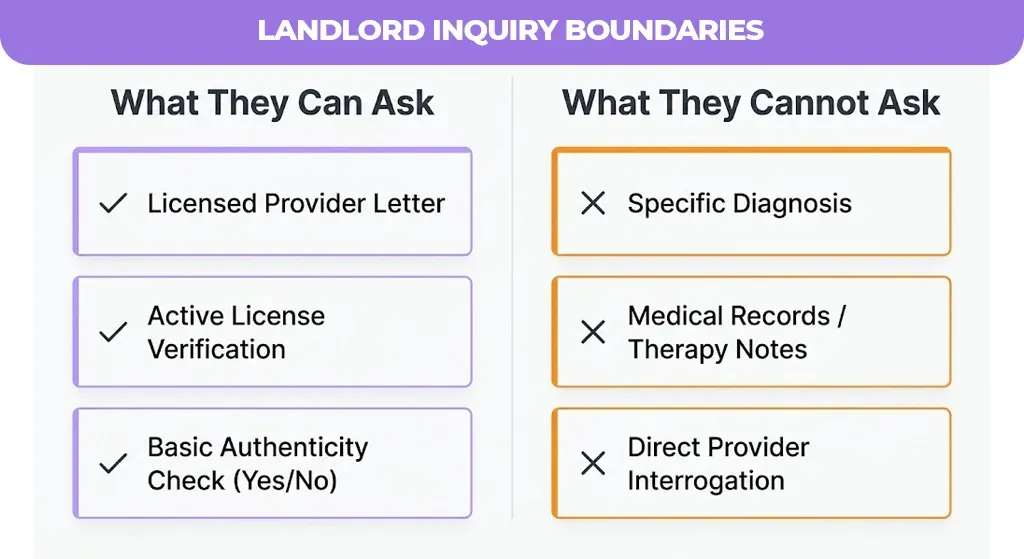
The landlord can ask for one thing: a letter from a licensed mental health professional confirming that you need the animal for emotional support. They are not allowed to ask about your specific diagnosis, request your medical records, or demand that the animal be professionally trained.
Landlord Can Ask
Landlord Cannot Ask
For a signed ESA letter from a licensed provider
For your specific diagnosis
To confirm the provider’s license is active
For medical records or therapy notes
For proof of vaccination or local pet licensing
For a notarized statement or sworn affidavit
For an updated letter if the current one is outdated
You to use a specific landlord-provided form
Basic yes-or-no questions about the letter’s authenticity
Your provider directly, without your consent
← swipe to compare →
How Do Landlords Verify an ESA Letter?
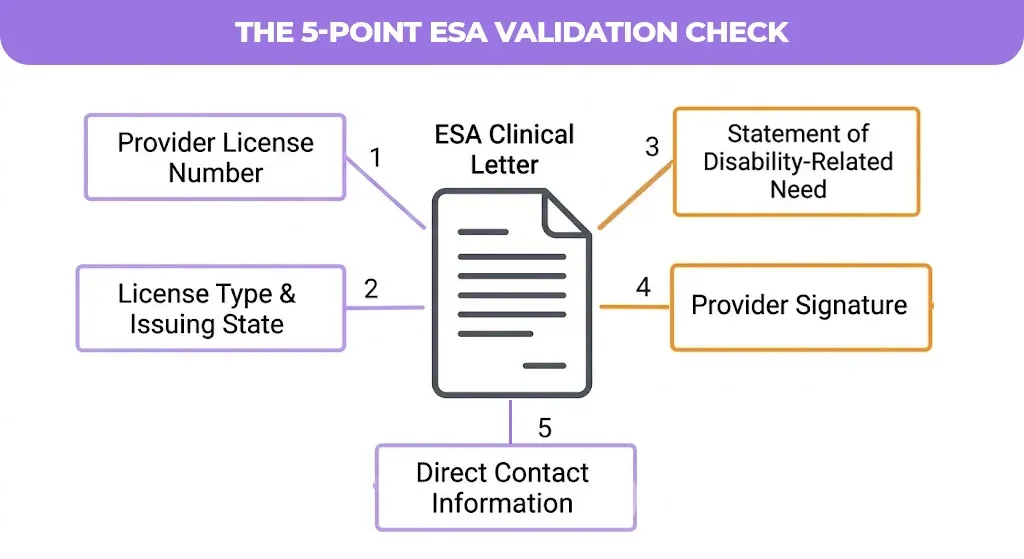
A landlord verifies an ESA letter by checking that the provider’s license number is real and active in the state licensing database, and by confirming that the letter includes the required details. They cannot call your therapist and ask what is wrong with you.
If a landlord has doubts, the honest fix is simple: they can ask the provider a yes-or-no question, like “Did you write this letter?” Anything beyond that crosses into territory the Fair Housing Act doesn’t allow.
The 2026 HUD Change: Why Your Letter Now Carries Less Weight
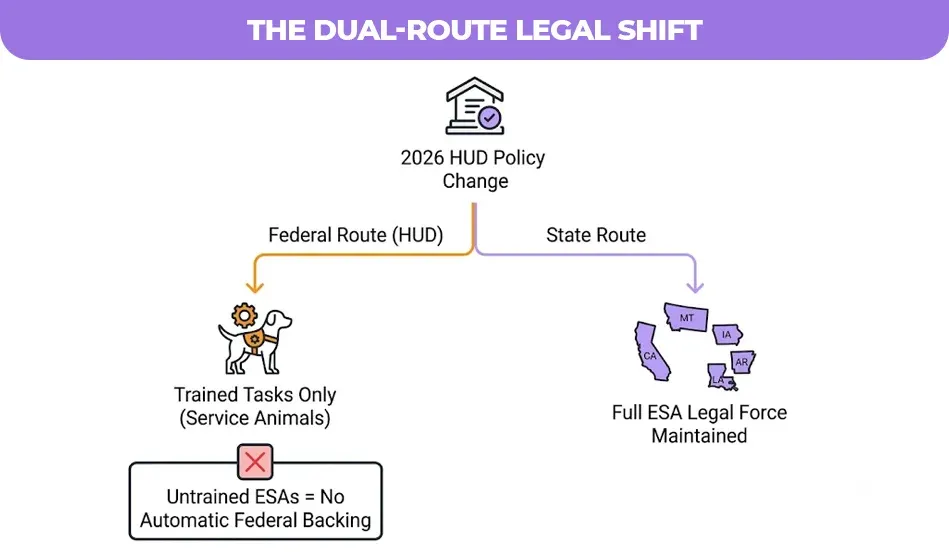
On May 22, 2026, HUD’s Office of Fair Housing and Equal Opportunity rescinded its 2020 guidance on emotional support animals. Federal enforcement now only backs animals individually trained for a disability-related task — the same standard used for service dogs — which means an untrained ESA no longer gets automatic federal backing.
This is the single biggest thing older articles about ESA letters get wrong in 2026. Before this change, HUD told landlords they generally had to accept a valid ESA letter, full stop. Now, HUD will only pursue a formal complaint if the animal has specific training tied to your disability, so a standard, untrained ESA sits in a weaker spot at the federal level.
Here’s what this actually means for you: the Fair Housing Act itself was not repealed, so you can still sue a landlord in court within two years of a denial. States like California, Montana, Iowa, Louisiana, and Arkansas have their own ESA laws that this HUD change does not touch. If your property is in one of those states, your letter still carries real legal force.
When Can a Landlord Legally Deny Your ESA?
Legal Reason for Denial
Illegal Reason for Denial
Letter is from an unlicensed or unverifiable provider
Property is a small owner-occupied building exempt from the FHA
Charging a pet deposit or pet rent
← swipe to compare →
A landlord who denies you must give a specific reason. A vague “policy” excuse, without one of the reasons above, is a red flag that the denial may not hold up.
How to Give Your ESA Letter to a Landlord
Timing matters more than people think. Give your ESA letter to a new landlord during the application process, ideally before you sign a lease, so there’s no confusion later about a surprise animal.
If the deadline is tight, see what a same-day ESA letter can realistically do before you book.
If you already live in the property and recently got your ESA, send your request to your landlord in writing as soon as you can. Include your ESA letter and explain that you are asking for a reasonable accommodation under the Fair Housing Act. Keep a copy of your request for your records. In most cases, landlords should respond within 10 business days.
Sample ESA Letter to Landlord – Accommodation Request Template
This is separate from your clinical ESA letter — it’s the short cover note you send along with it.
Dear [Landlord Name],
I am writing to request a reasonable accommodation under the Fair Housing Act to keep my emotional support animal, [Animal Name], in my unit. I have attached a letter from my licensed mental health provider confirming that I need this accommodation.
As an assistance animal, [Animal Name] is not subject to pet fees, deposits, or breed and weight restrictions under federal law. Please let me know if you need any additional information from my provider to process this request.
Thank you for your time.
[Your Name]
Your actual clinical ESA letter, written by your provider, should separately include their license number, license type, issuing state, a statement of your disability-related need, and their signature and contact information. A letter missing these details is one of the most common reasons landlords push back.
What to Do If Your Landlord Denies Your ESA Letter
Ask for the denial in writing, along with the landlord’s specific reason. This creates a paper trail and often reveals whether the denial is even legally valid.
If the denial is not based on one of the legal reasons mentioned above, you can file a private lawsuit in federal court. You can also contact your state fair housing agency if you are in a state with independent ESA protections. After the 2026 HUD change, a federal complaint about an untrained ESA is less likely to move forward, so a state-level complaint or private legal action is now the stronger path for most people.
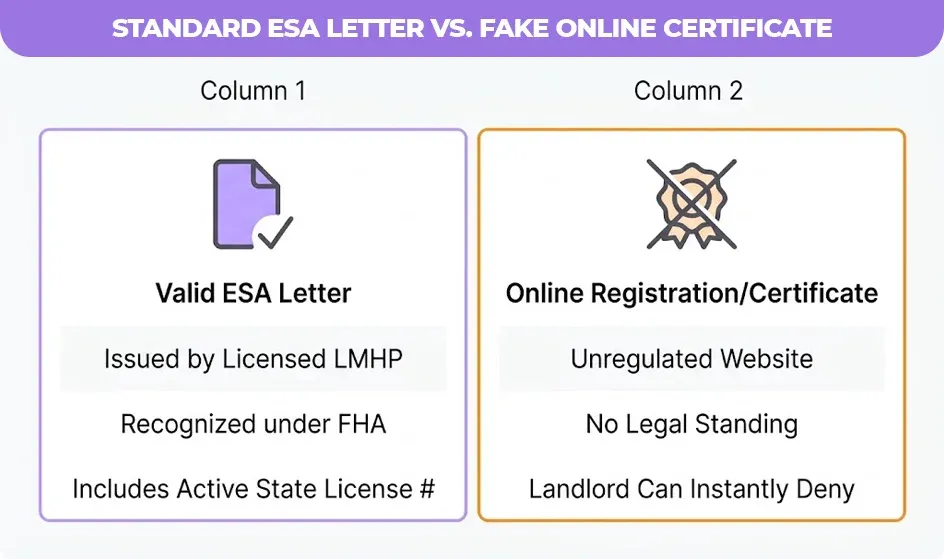
ESA Letter vs. Certificate or Registration
ESA Letter
Online Certificate/Registration
Issued by
Licensed mental health professional
Unregulated website
Legal standing
Recognized under the FHA
No legal standing
Required for housing
Yes
No, and landlords can ignore it
Includes license number
Yes
No
← swipe to compare →
A landlord is fully within their rights to reject a certificate or registration card on its own. Only the signed letter from a licensed provider counts.
Need documentation your landlord will actually accept? Establish a compliant clinical connection before you submit your accommodation request, not after it gets denied.
🐾 100% Risk-Free Guarantee (full refund if you don’t qualify, or if your landlord rejects the letter)
🐾 Written for housing accommodation requests under the Fair Housing Act
🐾 Live consultation with a clinician licensed in your state
Yes, an ESA can help people with OCD by offering emotional support, reducing stress, and improving daily routines as part of a treatment plan.
THE AUTHOR
Darren Andrew Rafel
LMFT, LCSW, LMHP
Licensed Psychotherapist
Darren is a leading expert in mental health advocacy and assistance animal documentation. He specializes in streamlining the process for obtaining ESA Letters, PSD Letters, and State-specific ESA compliance.