Emotional support animals (ESAs) are increasingly recognized for their ability to provide comfort, reduce anxiety, and improve mental well-being. While dogs are the most common ESAs, emotional support cats have become a popular choice for people seeking companionship and emotional stability.
This comprehensive guide explains what emotional support cats are, how to get certified, legal protections, and benefits. Whether you’re considering an emotional support cat or already have one, this article covers everything you need to know to ensure your cat is recognized as an ESA and you receive proper accommodations.
What Is an Emotional Support Cat?
An emotional support cat is a cat that provides comfort and emotional support to individuals with mental health conditions such as:
Anxiety
Depression
PTSD (Post-Traumatic Stress Disorder)
Stress-related disorders
Unlike service animals, emotional support cats do not require specialized training. Their mere presence helps their owner feel calmer, safer, and emotionally balanced.
How Do I Get an Emotional Support Cat?
Getting an emotional support cat involves several steps:
1. Meet the Criteria
To qualify, you must have a diagnosable mental health condition recognized by a licensed mental health professional (therapist, psychologist, or psychiatrist).
2. Obtain an ESA Letter
An emotional support cat letter, or emotional support animal letter for a cat, is a legal document issued by a licensed mental health professional. It states that your cat provides necessary emotional support to alleviate your symptoms.
3. Register Your Cat (Optional)
While emotional support cat registration or emotional support animal registration is not legally required, some landlords may request documentation. Make sure your ESA letter is valid and up-to-date.
4. Use Identification
You may choose to have an emotional support cat vest or ID for easy identification, though it is not required by law.
What Qualifies My Cat as an Emotional Support Animal?
To qualify, your cat must:
Provide emotional comfort and stability
Be prescribed or recommended by a licensed mental health professional
Be well-behaved and manageable in housing environments
Unlike service animals, cats do not need to perform specific tasks. Their emotional presence is sufficient.
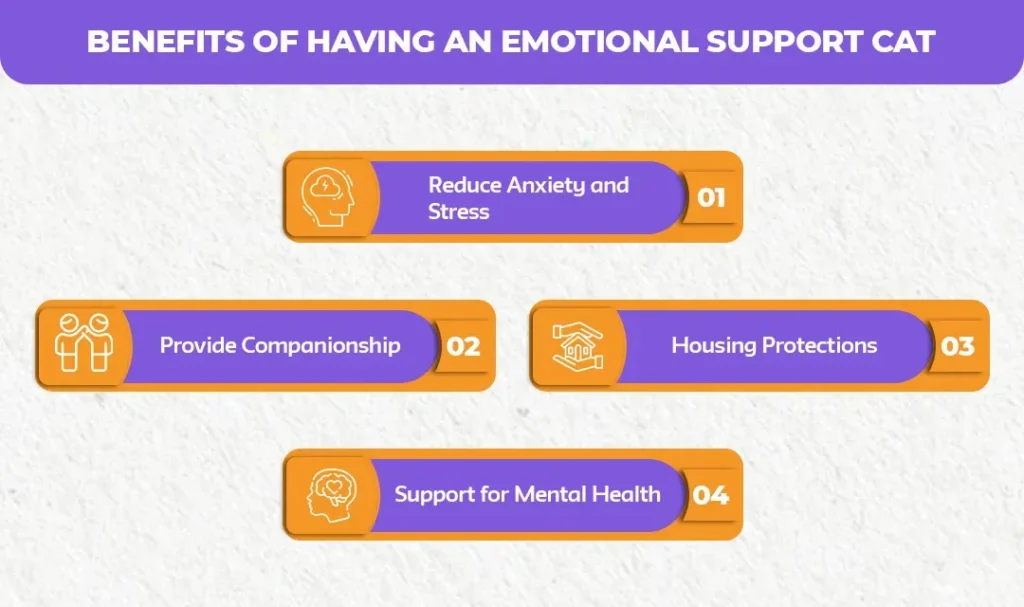
Benefits of Having an Emotional Support Cat
1. Reduce Anxiety and Stress
Cats have a calming presence, helping owners reduce anxiety and stress levels.
2. Provide Companionship
Emotional support cats alleviate loneliness and improve mental well-being.
3. Housing Protections
With a valid emotional support cat letter, landlords must accommodate your cat even in no-pet housing under the Fair Housing Act (FHA).
4. Support for Mental Health
Having a cat can improve focus, create a sense of responsibility, and reduce depressive symptoms.
Emotional Support Cat Certification
There is no official government “certification” for emotional support cats — the ESA letter from a licensed mental health professional is the only document with legal standing.
Steps to Get Certified:
Schedule an evaluation with a licensed therapist
Confirm your mental health condition and need for emotional support
Receive an ESA letter for your cat
This letter serves as proof for housing accommodations.
Emotional Support Cat Letter vs. Registration
Emotional Support Cat Letter – Legally required for housing accommodations. Must come from a licensed mental health professional.
Emotional Support Cat Registration – Optional service offered by third-party sites; does not replace a valid ESA letter.
Always prioritize an ESA letter over online “registries” for legal protection.
How to Register a Cat as an Emotional Support Animal
While registration is not mandatory — and carries no legal weight — some owners choose to register their ESA cat to:
Keep documentation organized
Receive optional ID cards and vests
Facilitate landlord communication
Steps to register:
Ensure you have a valid ESA letter
Submit your cat’s details to an ESA registration provider
Receive optional identification accessories
Note: Registration does not legally replace your ESA letter.
Can Cats Be Emotional Support Animals?
Yes! Cats are natural companions, making them excellent emotional support animals. Their calm demeanor, independence, and affection make them ideal for alleviating stress, anxiety, and depression.
Some people even prefer cats over dogs due to:
Smaller size for apartment living
Lower maintenance requirements
Natural ability to provide comfort and calm
Emotional Support Cat Training
Unlike service dogs, emotional support cats do not require specialized training. However, they should:
Be well-behaved in housing environments
Respond to basic commands if necessary
Remain calm around visitors and other pets
Proper behavior ensures that your ESA letter is respected and reduces conflicts with landlords.
Which Cat Breeds Are Good for Emotional Support?
While any cat can be an ESA, certain breeds are known for their affectionate and calm personalities:
Ragdoll – Extremely docile and affectionate
Siamese – Social, intelligent, and interactive
Maine Coon – Gentle giants, patient and friendly
Persian – Calm, low-energy, and soothing
British Shorthair – Easygoing, loyal, and adaptable
Selecting the right cat breed can enhance the emotional support experience.
The 3-3-3 Rule of Cats
The 3-3-3 rule is a guideline for introducing a cat to a new home or owner, which can be important for ESA cats:
3 days – Time for the cat to acclimate to its new environment
3 weeks – Period to develop trust and emotional bonding
3 months – Cat fully adapts to its role as an emotional support animal
Following this rule helps ensure a strong bond and effective emotional support.
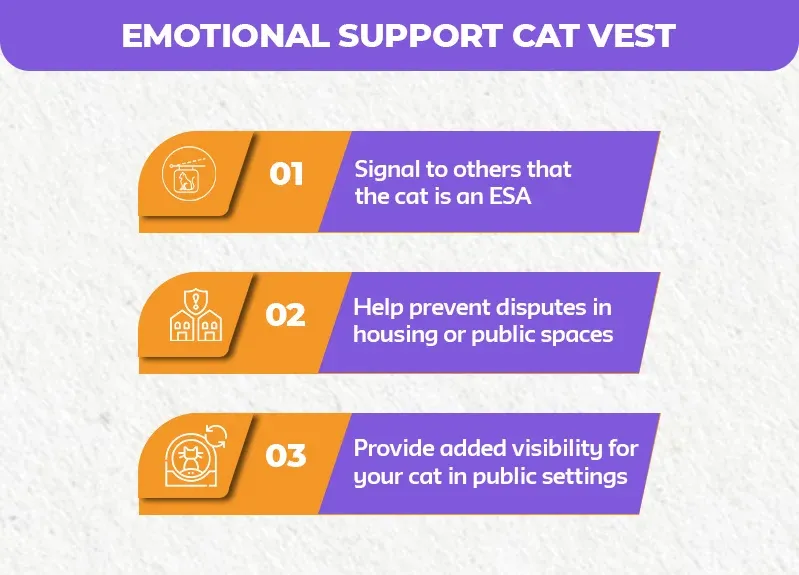
Emotional Support Cat Vest
While not legally required, an emotional support cat vest or harness can:
Signal to others that the cat is an ESA
Help prevent disputes in housing environments
Provide added visibility for your cat
Vests are optional accessories for convenience and identification.
Travel and Housing with an Emotional Support Cat
Housing Rights
With a valid ESA letter:
Landlords must make reasonable accommodations
No-pet housing policies cannot prevent ESAs
Owners may not be charged extra pet fees
Air Travel
Airlines have different policies; post-2021, most treat ESAs as regular pets. Check the airline’s guidelines before flying.
Get Your Emotional Support Cat Letter Today
If you need emotional support, a cat can provide comfort, companionship, and relief from anxiety or depression.
PetESALetter connects you with licensed professionals who can evaluate your needs and issue a legally valid emotional support cat letter quickly and securely.
Ensure housing accommodations
Protect your rights under the law
Improve emotional well-being with your cat
Visit PetESALetter today and take the first step toward a legally recognized emotional support cat!