
Last Updated on: August 14, 2026
Reviewed by Darren Andrew Rafel
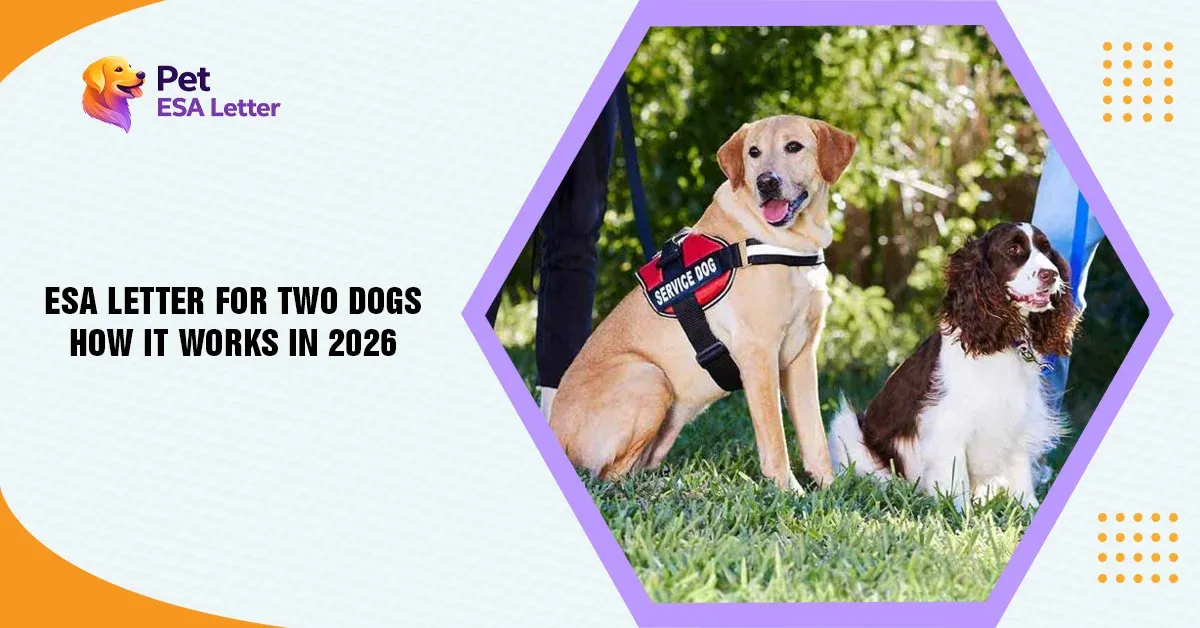
Yes, you can have two emotional support dogs. There’s no federal cap on the number of ESAs one person can have. But there’s a catch most sites skip past: a letter that just says “patient needs animals for support” will not cover two dogs the way it covers one.
Landlords are allowed to ask a harder question when a second animal enters the picture: what does dog two do that dog one doesn’t? If your documentation can’t answer that, you can run into real pushback even though the law is on your side when it’s done right. Here’s how to get it right the first time.
Yes. Federal law sets no limit on how many emotional support animals a person can have. What matters is whether a licensed mental health professional determines each animal is necessary to help manage your condition, and whether your home can reasonably support more than one animal.
Under the Fair Housing Act (FHA), landlords generally must accommodate more than one ESA, provided you have proper documentation and your provider justifies each animal as necessary for managing your symptoms. The number two is not special. The requirement is the same whether you’re asking for one animal or five: real documentation, real justification, and an animal your home can actually support.
Where people get tripped up is assuming “I already have one ESA letter, so I’ll just add a second dog to it.” Sometimes that works. Often it doesn’t, unless the letter is written correctly for both animals from the start.
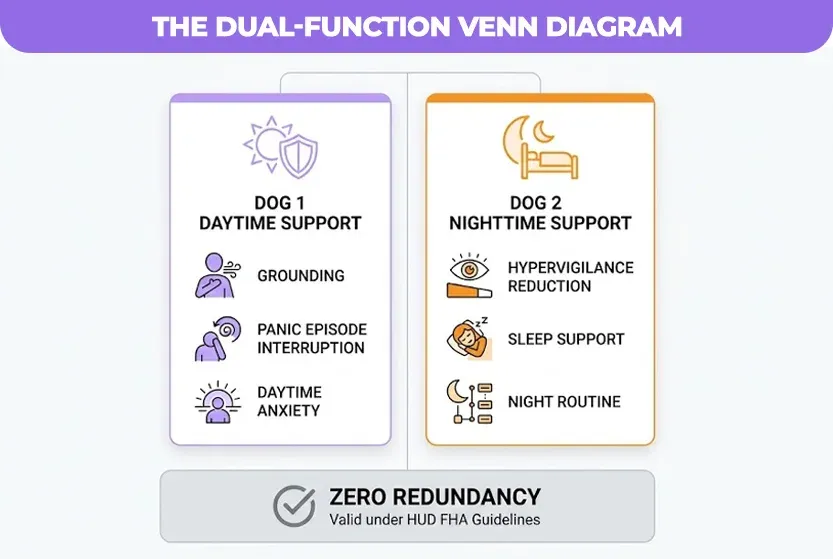
You don’t need a separate ESA letter for each dog. One letter can cover both animals, as long as it names each dog individually and explains the specific reason each one is necessary. Some providers still choose to issue a separate letter per animal, and either approach is legally valid. What matters is not the number of documents — it’s what’s inside them.
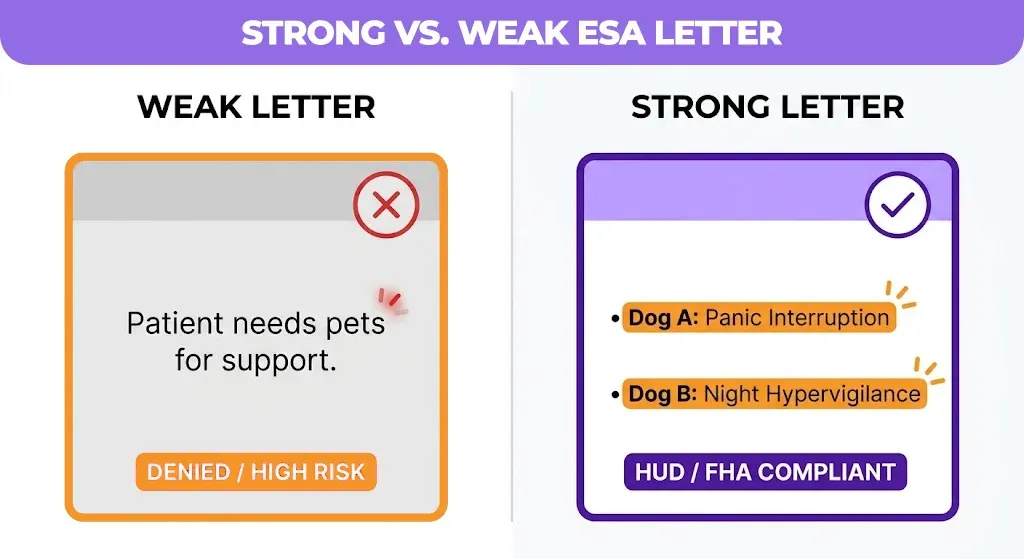
A weak letter for two dogs looks like this: “Patient has anxiety and benefits from having pets.” That single sentence, applied to two animals, tells a landlord nothing about why one dog wasn’t enough.
A strong letter looks more like this: “Patient’s PTSD symptoms include nighttime hypervigilance and daytime panic episodes. Dog A provides grounding and interruption during panic episodes. Dog B provides a consistent nighttime routine that reduces hypervigilance and supports sleep.” That’s a letter built to survive scrutiny.
Generic “patient needs animals” letters fail instantly when requesting two ESAs. Landlords have the legal right to ask what your second dog provides that the first one doesn’t. Our licensed clinicians craft individual, distinct therapeutic justifications for each of your dogs in a single legally sound letter. Get evaluated for your multi-dog household at PetESALetter today.
🐾 Qualify Both Dogs – Start Your Multi-ESA Evaluation!
Your provider’s name, license type, license number, and the state where they’re licensed
The date of your evaluation
A statement that you have a condition covered under the FHA’s definition of disability
Each dog identified individually — not “two dogs,” but named or otherwise clearly distinguished
A distinct, specific reason each dog is necessary, not the same sentence copied twice
A statement that the animals are part of your treatment or help you manage your condition
Signature and contact information your landlord could use to verify the letter is real
A landlord or a court will look at whether each animal serves a distinct purpose, and redundancy is a red flag. If your documentation just repeats the same generic reason for multiple animals of the same breed, that raises questions — while documentation showing one dog helps with daytime anxiety and another supports nighttime symptoms shows two separate therapeutic functions.
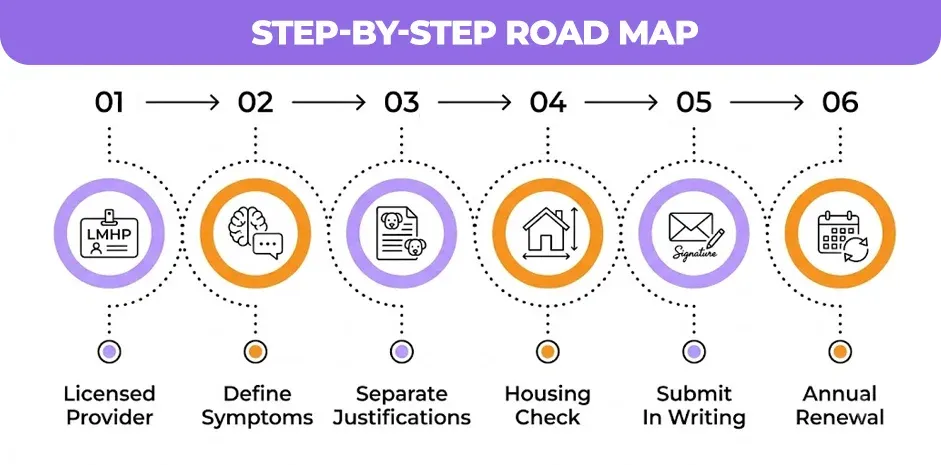
To get a valid ESA letter for two dogs, book an evaluation with a licensed mental health professional in your state, explain how each dog helps with a different part of your condition, and receive a signed letter that names both animals individually with separate justifications.
Book an evaluation with a licensed provider. This needs to be a psychiatrist, psychologist, licensed clinical social worker, licensed counselor, or a treating physician who is actively managing your mental health — not a wellness coach or an online quiz.
Be specific about both dogs. Come prepared to explain, in your own words, what each dog actually does for you day to day. If you can’t articulate the difference yourself, your provider can’t write it convincingly either.
Ask for individual justification in the letter. Don’t accept a letter that treats “two dogs” as one line item. Ask specifically that each animal gets its own sentence explaining its role.
Confirm your home can support both animals. A landlord can factor in whether the unit can reasonably and safely house two dogs — size, existing occupancy limits, and building capacity all matter here.
Submit your request in writing. Use the phrase “reasonable accommodation” and attach the letter, so you have a dated record if the request is ever disputed.
Keep a copy for yourself and renew annually. Most ESA letters are treated as valid for 12 months. A stale letter for a two-dog household is an easy thing for a skeptical landlord to challenge.
| One ESA Letter, One Dog | One ESA Letter, Two Dogs | |
|---|---|---|
| Legal standard | Disability + disability-related need | Same, applied individually to each animal |
| Documentation detail required | Moderate | Higher — each animal needs its own justification |
| Landlord scrutiny | Standard | Landlords can reasonably ask why a second animal is needed |
| Grounds for denial | Direct threat, property damage, non-household animal type | Same, plus “undue financial or administrative burden” in some cases |
| Cost | $100–$200 | Usually the same fee, since it’s one evaluation covering both dogs |
| Renewal | Annual | Annual, for both animals together |
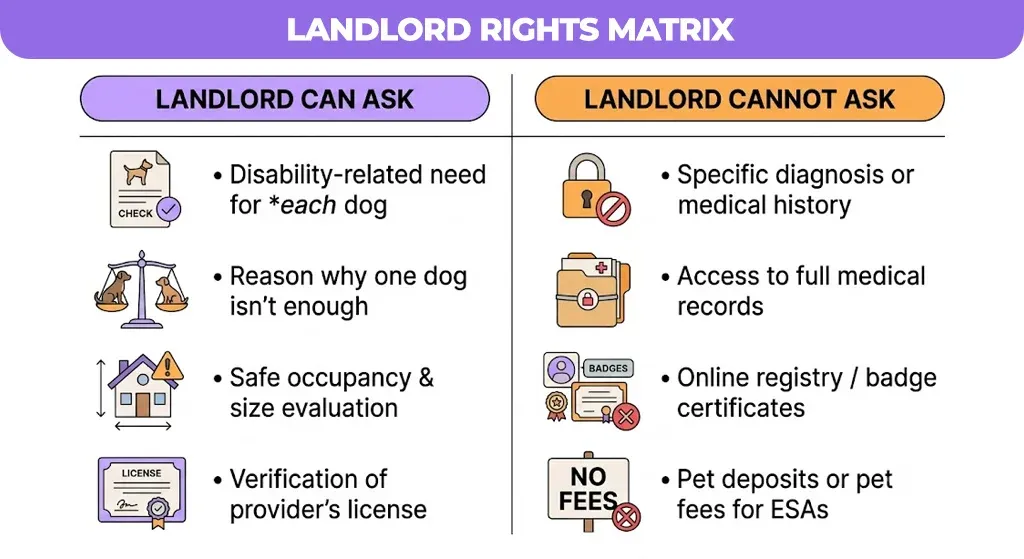
Landlords aren’t required to take a two-ESA request at face value, and they’re not powerless to ask questions. Here’s where the line actually sits.
| Landlord CAN ask | Landlord CANNOT ask |
|---|---|
| For documentation showing a disability-related need for each animal | For your specific diagnosis |
| Why one animal doesn’t meet the need already met by the request | For your medical records |
| Whether the unit can reasonably and safely house two animals | For a registration number or “certification” |
| About behavior history if either dog has caused actual problems | For a separate pet deposit or pet fee for either dog |
| For confirmation the letter’s provider is licensed and verifiable | You to justify the request verbally beyond the letter’s content |
Landlords have legitimate grounds for denial when you’re requesting several animals, including undue financial or administrative burden in specific circumstances — though this is a high bar, not something a landlord can invoke just because they’d rather not deal with two animals.
The Fair Housing Act still requires reasonable accommodation for legitimate ESAs, including more than one. But in May 2026, HUD narrowed federal enforcement to focus on trained service animals, which means documentation quality now matters more for households requesting multiple untrained ESAs than it did before.
In May 2026, HUD issued enforcement guidance stating it will pursue Fair Housing Act complaints mainly for animals individually trained for a specific disability-related task, aligning with the ADA’s service animal standard, rather than automatically for untrained emotional support animals. The Fair Housing Act itself hasn’t changed — Congress has not touched the statute, and its reasonable accommodation requirement still applies to landlords — but HUD is no longer expected to enforce ESA complaints the same way it did under its 2020 guidance.
For a household asking for two ESAs, this shift raises the practical stakes. Having more than one ESA is still permissible, provided each ESA addresses a different disability-related need — but that documentation now has to do more work, since federal backup for a weak or vague request is less certain than it used to be.
What this means for you:
Your letter needs to be airtight, not just present. A generic, copy-paste justification for two animals is far more likely to get challenged now.
State law may still carry more weight than before. This HUD memo doesn’t affect Section 504 protections for federally assisted housing, and it doesn’t touch state fair housing laws or complaints filed under them — so check your state housing agency’s current rules, since some states have stronger independent protections.
A denied request for two ESAs can still be challenged directly. You don’t need HUD to pursue your complaint federally to have a valid legal claim under the FHA.
A landlord can’t deny a second ESA just because two animals feel like a lot. But they can deny it, or push back, in specific situations:
No distinct purpose shown. If the letter can’t explain what the second dog does that the first doesn’t, a landlord has grounds to question the request.
Direct threat to others. If either specific animal has a documented history of aggression that can’t be managed.
Substantial property damage risk. Tied to the specific animals’ actual behavior, not assumptions about having two dogs.
Unreasonable burden for the unit. A studio apartment with two large dogs, where safety or space genuinely can’t accommodate them, is a legitimate concern a landlord can raise.
Non-household animal type. ESAs generally need to be animals commonly kept in homes; this rarely applies to dogs specifically, but it matters if one of your two ESAs is not a dog.
Using the exact same sentence for both dogs. This is the single most common reason a two-dog letter gets challenged.
Getting the letter from an online service that never actually asks about each dog individually. If a provider issues your letter without discussing both animals specifically, the letter will read that way — and it shows.
Not renewing both dogs’ documentation together. If one dog’s justification lapses or was never updated, it can undermine the whole request.
Assuming a service dog “vest” or online certificate helps. It doesn’t add anything legally, for one dog or two — see the section below.
The same warning signs that apply to a single ESA apply here (see our guide to getting an ESA letter for one dog for the full list), and they matter more with two animals on the line:
Any site selling “registration” or a spot in a “database.” No official registry exists — a registration number can’t substitute for a real letter, for one dog or two.
Instant approval with no real evaluation of either dog specifically. A legitimate letter requires an actual clinical evaluation, and for two animals, that evaluation should touch on both.
A single boilerplate paragraph that just says “multiple ESAs.” If the letter can’t name or distinguish your dogs, it wasn’t written with your situation in mind.
No verifiable license number or state for the provider. A real letter always identifies the provider clearly enough that a landlord could verify their license.
Certificates, ID cards, or vests sold as the main product. These items have no legal function under the Fair Housing Act — the letter itself is what matters.
Asking for two ESAs in 2026 requires airtight documentation. With HUD narrowing federal enforcement priorities, landlords scrutinize multi-animal requests far more rigorously. At PetESALetter, our state-licensed clinicians ensure every letter contains explicit, verifiable dual-role clinical justifications that withstand landlord review.
Get Your Multi-Dog ESA Assessment 🐾
Both dogs already live with you and clearly help with different symptoms → Book one evaluation, and ask your provider to write individualized justification for each dog in a single letter.
You’re getting a second dog and aren’t sure it will qualify → Talk to your provider before you commit to the dog, so you know whether your situation supports a second ESA justification.
Your current ESA letter only mentions one dog vaguely → Go back to your provider and get it updated with individual language for each animal before you submit anything to your landlord.
A landlord already denied your second ESA → Review whether your letter distinguishes both animals; if it does and they still denied it, document everything and consider a state fair housing complaint.
Protect both of your dogs under one legally recognized ESA evaluation. Connect with an active, state-licensed clinical practitioner who understands multi-ESA housing requirements and secure your peace of mind.
Yes, you may be able to get an ESA letter for two dogs if a licensed mental health professional determines that both animals are necessary for your mental health. The provider should clearly document the need for each animal.
A valid emotional support dog letter is written on a licensed mental health professional’s letterhead. It states that you have a qualifying mental or emotional disability and that your dog provides support that helps relieve symptoms of your condition. It also includes the provider’s signature and license information.
Yes, both dogs can qualify as emotional support animals if a licensed mental health professional determines that each one provides a necessary therapeutic benefit. Your ESA letter should explain the need for multiple animals when appropriate.
Yes, many landlords verify ESA letters. They may confirm that the letter was issued by a licensed mental health professional and that the provider’s license is active, but they cannot ask for your specific diagnosis or medical records.

Licensed Psychotherapist
Darren is a leading expert in mental health advocacy and assistance animal documentation. He specializes in streamlining the process for obtaining ESA Letters, PSD Letters, and State-specific ESA compliance.

ESA Letters Issued

Successful Consultations

Licensed Therapist Network

Client Satisfaction Rate




Petesaletter.com helps you get your emotional support animal letter online with guidance and support.

Got Questions? Call us 24/7
Copyright © 2020-2026 PetESALetter All rights reserved. Terms | Privacy | Refund
Owned and Operated by Verimedix LLC