Emotional Well-Being and Support Animals: Complete Guide
Last Updated on: August 14, 2026
Reviewed by Darren Andrew Rafel
Licensed Agent
@ Petesaletter
Emotional well-being plays a vital role in overall health and quality of life. Many individuals experience stress, anxiety, depression, or other emotional challenges that affect daily functioning. One increasingly recognized way to improve mental health is through the companionship of emotional support animals (ESAs).
Support animals provide comfort, stability, and companionship for people dealing with emotional or psychological conditions. Their presence can help reduce stress levels, improve mood, and promote a sense of security. In recent years, emotional support animals have become an important part of mental health care for many individuals.
This guide explores the connection between emotional well-being and support animals, including how they help, the best animals for emotional support, and why people rely on them.
What Are Emotional Support Animals?
Emotional Support Animals (ESAs) are animals that provide therapeutic benefits to individuals experiencing emotional or mental health challenges. Unlike service animals, ESAs do not require specialized training to perform specific tasks.
Instead, their primary role is to offer comfort, companionship, and emotional stability. Their presence alone can help reduce symptoms associated with anxiety, depression, PTSD, and other conditions.
An ESA must be recommended by a licensed mental health professional who determines that the animal provides meaningful emotional support as part of the individual’s treatment plan.
How Animals Improve Emotional Well-Being
Animals have a natural ability to form strong emotional bonds with humans. These bonds can positively affect mental health and emotional stability.
Key Emotional Benefits
Reduced stress and anxiety
Increased feelings of comfort and safety
Lower levels of loneliness
Improved mood and emotional balance
Encouragement for healthy routines
Spending time with animals can also stimulate the release of oxytocin, a hormone associated with happiness and bonding. This biological response helps people feel calmer and more connected.
How Animals Help With Emotional Support
Animals provide emotional support in several ways that contribute to better mental health.
1. Providing Companionship
One of the most important roles of an emotional support animal is companionship. Many individuals facing emotional challenges experience isolation or loneliness. Having an animal companion can help create a sense of connection and comfort.
Animals offer unconditional companionship, which helps individuals feel less alone and more supported.
2. Reducing Anxiety and Stress
Interacting with animals has been shown to lower stress levels and reduce anxiety. Activities such as petting, playing, or simply sitting with a pet can create a calming effect.
Many people report that spending time with their ESA helps them relax during stressful situations.
3. Encouraging Daily Routine
Animals require regular care such as feeding, exercise, and grooming. These responsibilities encourage individuals to maintain a daily routine.
A structured routine can improve mental health by creating stability and a sense of purpose.
4. Providing Emotional Comfort
Support animals are highly sensitive to their owner’s emotions. They often respond to emotional changes by offering comfort through physical closeness or attention.
This emotional responsiveness can help individuals feel supported during difficult moments.
What Animal Is Best for Emotional Support?
Many different animals can serve as emotional support animals, but some are more common due to their temperament and ability to bond with humans.
Animal
Why They Are Good ESAs
Dogs
Loyal, affectionate, and highly responsive to emotions
Cats
Calm companions that provide comfort and relaxation
Rabbits
Gentle animals that form strong bonds with owners
Birds
Social and interactive companions
Guinea pigs
Friendly pets that provide companionship
Dogs and cats are the most common emotional support animals because they easily form emotional connections with their owners.
Why Do People Have Emotional Support Animals?
People rely on emotional support animals for many different reasons related to mental health and emotional stability.
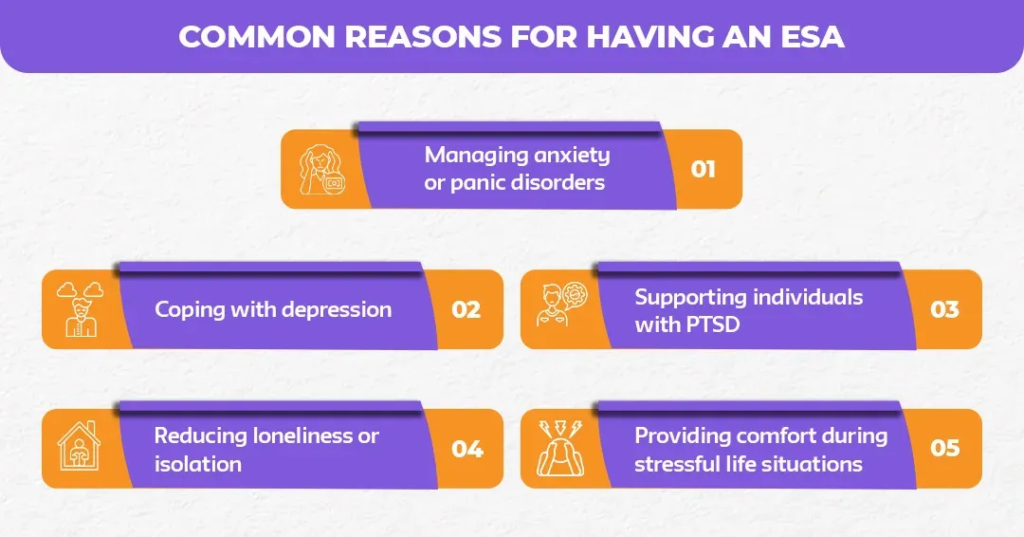
Common Reasons for Having an ESA
Managing anxiety or panic disorders
Coping with depression
Supporting individuals with PTSD
Reducing loneliness or isolation
Providing comfort during stressful life situations
Emotional support animals can play a significant role in improving overall emotional well-being and helping individuals navigate daily challenges.
Emotional Support Animals vs. Service Animals
Many people confuse emotional support animals with service animals, but there are important differences.
Feature
Emotional Support Animal
Service Animal
Training
No specialized training required
Extensive training required
Role
Provides emotional comfort
Performs specific tasks
Common Animals
Dogs, cats, small pets
Usually dogs
Legal Status
Supported by ESA documentation
Protected under ADA
Understanding these differences helps ensure the correct support animal is used for each individual’s needs.
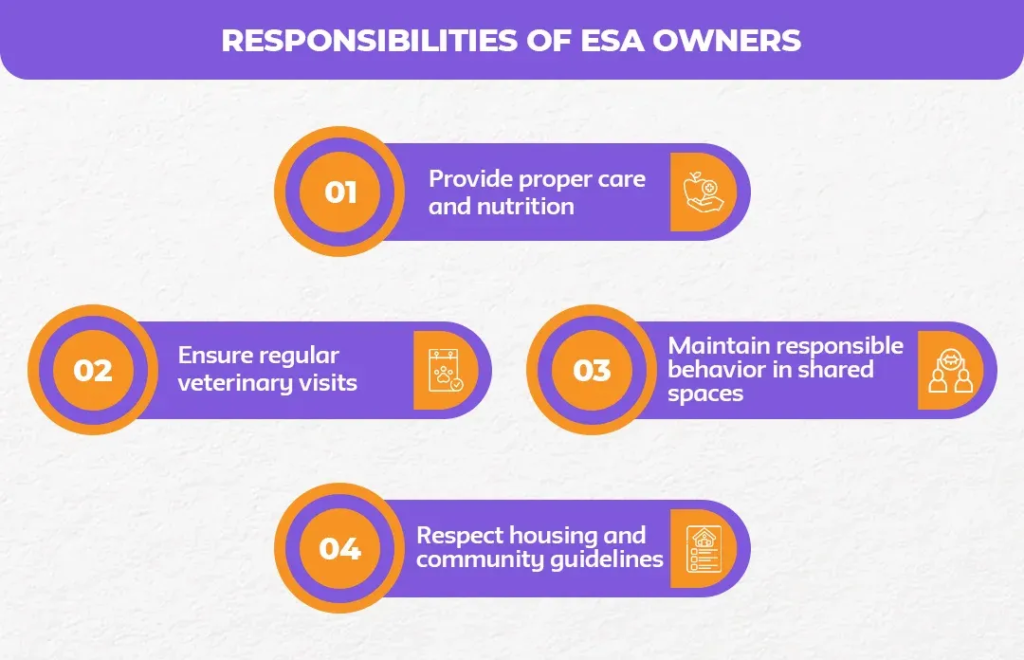
Responsibilities of ESA Owners
Owning an emotional support animal involves responsibilities that ensure both the animal and owner benefit from the relationship.
ESA owners should:
Provide proper care and nutrition
Ensure regular veterinary visits
Maintain responsible behavior in shared spaces
Respect housing and community guidelines
Responsible ownership ensures emotional support animals remain beneficial companions.
Conclusion
Emotional support animals play an important role in promoting emotional well-being and mental health. Their companionship, comfort, and emotional connection can significantly improve the lives of individuals dealing with stress, anxiety, depression, and other challenges.
By offering unconditional support and companionship, emotional support animals help people feel more secure, connected, and emotionally balanced. As awareness of mental health continues to grow, emotional support animals are becoming an increasingly valuable resource for individuals seeking comfort and stability.
Ready to Get an ESA Letter?
If an animal provides emotional comfort and support in your life, you may qualify for an Emotional Support Animal (ESA) letter.
PetESALetter connects individuals with licensed professionals who can evaluate your needs and provide legitimate ESA letters that support your emotional well-being.
Contact PetESALetter today to begin the process of obtaining your emotional support animal letter.
Think you might qualify? A short assessment with a licensed clinician is the only way to know — and the only route to documentation that actually carries weight.
🐾 100% Risk-Free Guarantee (full refund if you don’t qualify, or if your landlord rejects the letter)
🐾 Find out in minutes whether you qualify
🐾 Live consultation with a state-licensed mental health professional
People have emotional support animals to help manage anxiety, depression, PTSD, loneliness, and other emotional or psychological conditions.
THE AUTHOR
Darren Andrew Rafel
LMFT, LCSW, LMHP
Licensed Psychotherapist
Darren is a leading expert in mental health advocacy and assistance animal documentation. He specializes in streamlining the process for obtaining ESA Letters, PSD Letters, and State-specific ESA compliance.