
Last Updated on: August 14, 2026
Reviewed by Darren Andrew Rafel
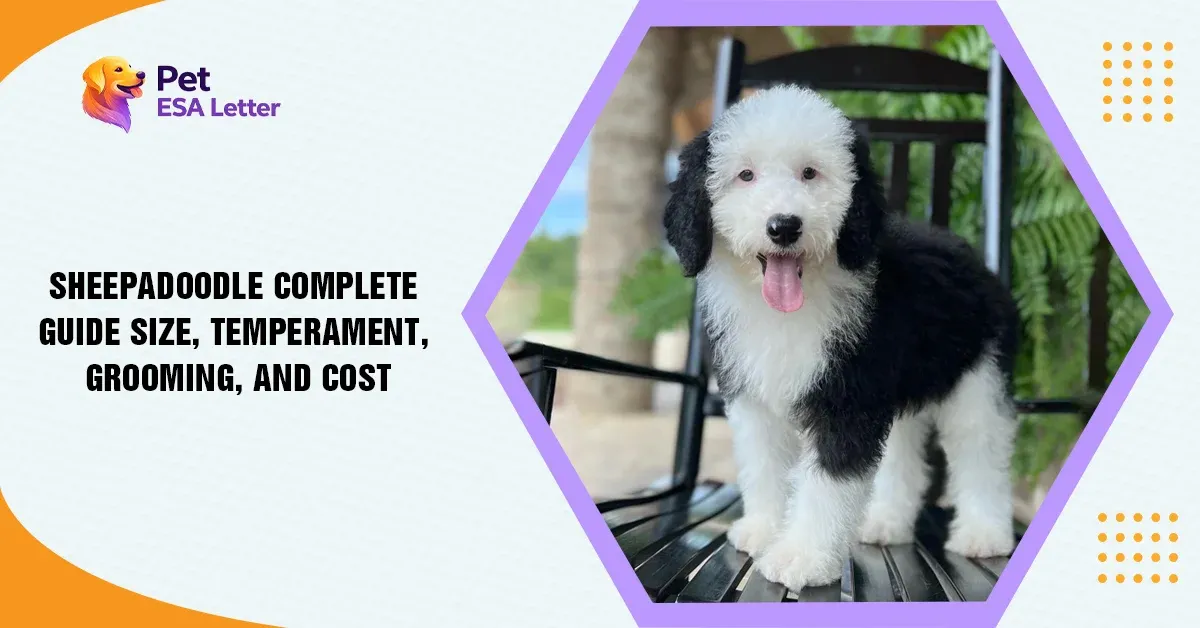
If you have ever crossed paths with a fluffy, black-and-white dog that looked equal parts teddy bear and mop, there is a good chance you have already met a sheepadoodle. These dogs have an almost magnetic charm; they are smart, affectionate, low-shedding, and strikingly beautiful. It is no surprise they have become one of the most searched designer breeds in the country.
But popularity alone is not a good reason to bring any dog home. Before you fall head-over-heels for that fluffy face, it is worth understanding exactly what owning a sheepadoodle actually involves: the daily grooming commitment, the energy levels, the health risks, and the real cost of ownership over a decade or more.
This guide covers everything: sheepadoodle temperament, size, coat types, grooming needs, common health concerns, price ranges, and how they compare to similar breeds like the goldendoodle and bernedoodle. By the end, you will know whether this breed is genuinely the right fit for your household — or whether another dog might serve you better.
A sheepadoodle is a designer dog breed created by crossing an Old English Sheepdog with a Standard Poodle. The result is a highly intelligent, low-shedding, family-friendly dog known for its distinctive black-and-white coat and playful personality.
The sheepadoodle is not a purebred dog. It is what is commonly called a “designer breed” or “hybrid breed,” intentionally bred to combine the desirable qualities of two established purebreds. Breeders paired the loyal, gentle Old English Sheepdog with the highly intelligent, low-shedding Standard Poodle.
The goal was simple: produce a dog that sheds minimally (thanks to Poodle genetics), has a calm and affectionate temperament (courtesy of the Old English Sheepdog), and still carries that distinctive shaggy look that makes everyone stop on the street to ask about them.
The American Kennel Club (AKC) does not officially recognize the sheepadoodle as a distinct breed, since it is a crossbreed. However, both parent breeds — the Old English Sheepdog and the Standard Poodle — are well-established AKC-recognized breeds with documented breed standards and thorough health testing protocols that responsible breeders follow.
Sheepadoodles first gained real traction in the United States in the 2000s, riding the broader wave of Poodle-cross popularity that also gave us the labradoodle and goldendoodle. Today, they are a fixture in family homes, apartments, and increasingly, in emotional support and therapy animal roles.
Breed Note: Because sheepadoodles are a hybrid, individual puppies can vary quite a bit in appearance and temperament — even within the same litter. Ask your breeder about the specific lineage and temperament of the parents.
The sheepadoodle’s coat is one of its most recognizable features, and there is more variety here than most people expect. Coat colors span a wide range:
Black and white — the most recognizable and most commonly sought-after pattern
Solid black — less common but striking, often with a wavy or curly texture
Brown or chocolate — a warm, rich coat color inherited from certain Poodle lines
Solid white or cream — soft and fluffy, often lighter at birth and potentially fading with age
Merle — a mottled, marbled pattern that produces blue or green eyes in some dogs
Golden or red — less typical, usually indicating a Poodle line carrying red or apricot genes
Beyond color, coat texture varies considerably. This matters because texture directly affects how much your dog sheds and how intensive grooming will be.
Curly coat — tightest curl, very close to a Poodle coat; lowest shedding, but mats most easily if not brushed regularly
Wavy coat — the most common texture in sheepadoodles; strikes a balance between manageability and low shedding
Straight coat — less common; tends to shed more and is generally easier to brush but harder to keep tangle-free
Most sheepadoodles have wavy or curly coats. Their eyes are typically brown, though merle-patterned dogs sometimes present with blue or heterochromatic (two different colored) eyes.
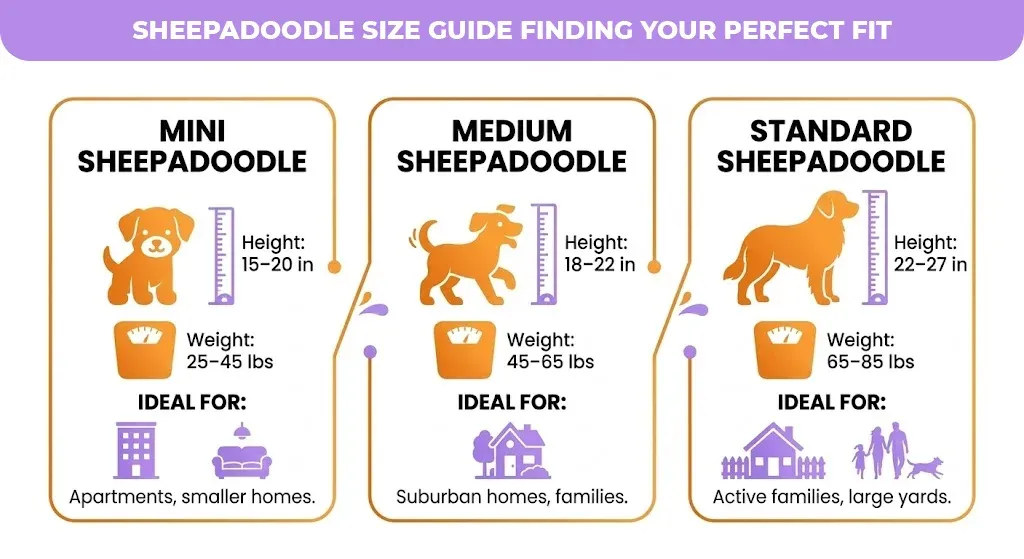
Sheepadoodles come in three sizes. Standard sheepadoodles weigh 65–85 lbs and stand 22–27 inches tall. Mini sheepadoodles weigh 25–45 lbs. Size depends largely on whether a Standard, Miniature, or Toy Poodle was used in breeding.
Size is one of the first questions prospective owners ask — and rightfully so. A standard sheepadoodle is a big dog. Here is how the three size categories break down at full growth:
| Type | Height (Shoulder) | Weight | Best For |
|---|---|---|---|
| Mini Sheepadoodle | 15–20 inches | 25–45 lbs | Apartments, smaller homes |
| Medium Sheepadoodle | 18–22 inches | 45–65 lbs | Suburban homes, families |
| Standard Sheepadoodle | 22–27 inches | 65–85 lbs | Active families, homes with yards |
Size is largely determined by which variety of Poodle was used. Most sheepadoodles reach their full adult size between 12 and 18 months of age, though larger standard-sized dogs may continue filling out until around two years old.
Sizing Tip: If a breeder promises a specific adult weight with certainty for a first-generation (F1) sheepadoodle puppy, be cautious. Reputable breeders will give you a range rather than an exact number.
Sheepadoodles are friendly, intelligent, and deeply loyal. They are gentle with children, get along well with other pets, and bond closely with their families. However, that bond can also make them prone to separation anxiety if left alone for long periods.
Talk to any sheepadoodle owner and you will hear the same themes: these dogs are incredibly affectionate, surprisingly smart, and endlessly entertaining. They inherit the Poodle’s sharp intelligence and the Old English Sheepdog’s gentle, people-oriented nature, a combination that makes them genuinely easy to be around.
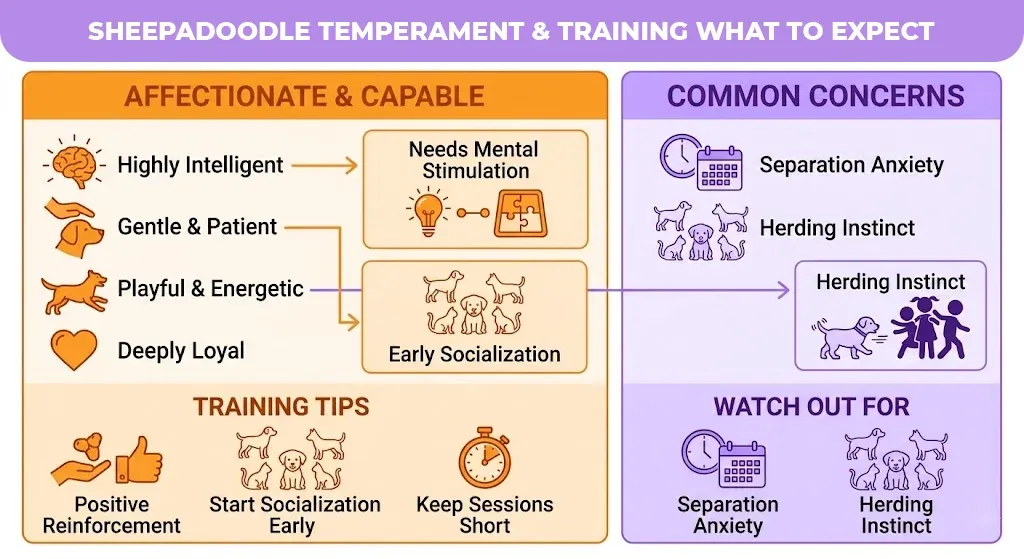
Friendly and social: Sheepadoodles tend to be warm with strangers, though some develop a mild protective instinct from their herding dog lineage.
Highly trainable: The Poodle parent contributes one of the highest canine intelligence ratings, making sheepadoodles fast learners who respond well to positive reinforcement.
Great with kids: Their gentle patience and playful energy make them excellent family dogs, particularly for households with young children.
Good with other pets: Most sheepadoodles coexist peacefully with other dogs and cats, especially when socialized early.
Energetic but not hyperactive: They have moderate-to-high energy and need daily exercise, but are not the relentlessly bouncy type that leaves owners exhausted.
Watch Out For: Sheepadoodles are prone to separation anxiety. If your household has long work days with no one home, you will need to invest in doggy daycare, a dog walker, or careful crate training to prevent destructive behavior born from stress.
No dog is truly 100% hypoallergenic — including sheepadoodles. However, because of their Poodle genetics, sheepadoodles shed significantly less than most breeds, which reduces allergens in your home. Many allergy sufferers do well with curly-coated sheepadoodles.
The word “hypoallergenic” gets thrown around loosely in the dog world. Human dog allergies are primarily triggered by a protein called Can f 1, found in dog dander, saliva, and urine — not the fur itself. Shedding fur just happens to carry dander around your home, which is why low-shedding breeds cause fewer reactions in sensitive people.
Curly-coated sheepadoodles shed the least — most loose hair gets trapped in the curl rather than falling on furniture
Wavy-coated dogs shed a small amount — still significantly less than most purebreds
Straight-coated sheepadoodles shed the most — still low compared to something like a Labrador, but noticeably more than their curly-coated siblings
If allergies are a concern in your household, spending time with the specific puppy you are considering — and potentially the parent dogs — is the best real-world test before committing.
Sheepadoodles require brushing at least 3–4 times per week and professional grooming every 6–8 weeks. Their coats mat easily if neglected, especially behind the ears, around the collar, and under the legs.
Here is the trade-off with sheepadoodles: low shedding comes at the cost of high grooming. The very coat texture that keeps your furniture hair-free is also the one most prone to tangling and matting. If you are not ready for a consistent grooming routine, this breed will quickly become a source of frustration.
Brushing: Aim for 3–4 times per week with a slicker brush or pin brush; daily brushing is ideal for curlier coats
Bathing: Every 4–6 weeks, or as needed. Overbathing strips natural oils from the coat
Ear cleaning: Weekly checks and cleaning to prevent infections — sheepadoodles are prone given their floppy ears
Nail trimming: Every 3–4 weeks
Dental care: Brushing 2–3 times per week, with annual professional cleanings recommended by most vets
Teddy bear cut: rounded face, uniform body length — the classic and most popular choice
Puppy cut: short, even length all over — easy to maintain and great for warmer climates
Kennel cut: very short, practical cut — minimal styling time, maximum practicality
Summer trim: shorter body with a slightly longer face — keeps dogs cool without losing all their character
Most sheepadoodle owners visit a professional groomer every 6–8 weeks. At an average cost of $80–$150 per session depending on size and location, annual grooming alone can run $600–$1,300 per year. Factor this into your budget from day one.
The average sheepadoodle lifespan is 12 to 15 years. Like all dogs, they are susceptible to certain hereditary conditions from both parent breeds, including hip dysplasia and progressive retinal atrophy.
One of the genuine advantages of hybrid breeds is the concept of “hybrid vigor” — the idea that crossbred dogs may be healthier than their purebred counterparts due to greater genetic diversity. The evidence on this is mixed, but many sheepadoodles live long, healthy lives well into their teens when given proper care.
Hip dysplasia: A malformation of the hip joint common in larger breeds; responsible breeding includes hip scoring of parent dogs.
Bloat (GDV): A life-threatening condition more common in deep-chested large breeds; symptoms include a distended abdomen and distress after eating.
Progressive retinal atrophy (PRA): A hereditary eye condition that can lead to blindness; genetic testing of parents can reduce this risk.
Ear infections: Floppy, furry ears trap moisture — regular cleaning and drying after baths is essential.
Allergies: Skin and environmental allergies are relatively common, often managed through diet and regular vet care.
Longevity Factors: Diet quality, consistent exercise, preventive veterinary care, and maintaining a healthy weight all significantly influence how long a sheepadoodle lives. Obesity is one of the most preventable contributors to joint problems and shortened lifespans in large-breed dogs.
Sheepadoodles are a joy to train. They pick up new commands quickly, respond well to praise and food rewards, and genuinely seem to enjoy the interaction. This intelligence does come with a caveat: a bored sheepadoodle is a destructive one. Mental stimulation is just as important as physical exercise.
Start obedience training and socialization as early as 8 weeks old
Use positive reinforcement — treats, praise, and play — rather than punishment-based methods
Keep training sessions short (10–15 minutes) and frequent for best retention
Puppy classes offer both training structure and critical early socialization with other dogs
A standard sheepadoodle needs at least 60–90 minutes of physical activity daily. Mini sheepadoodles can typically manage with 45–60 minutes. Good exercise options include:
Brisk walks or jogs
Fetch and retrieval games
Agility courses or obstacle activities
Swimming (many sheepadoodles love water)
Mental stimulation games: puzzle feeders, hide-and-seek, scent work
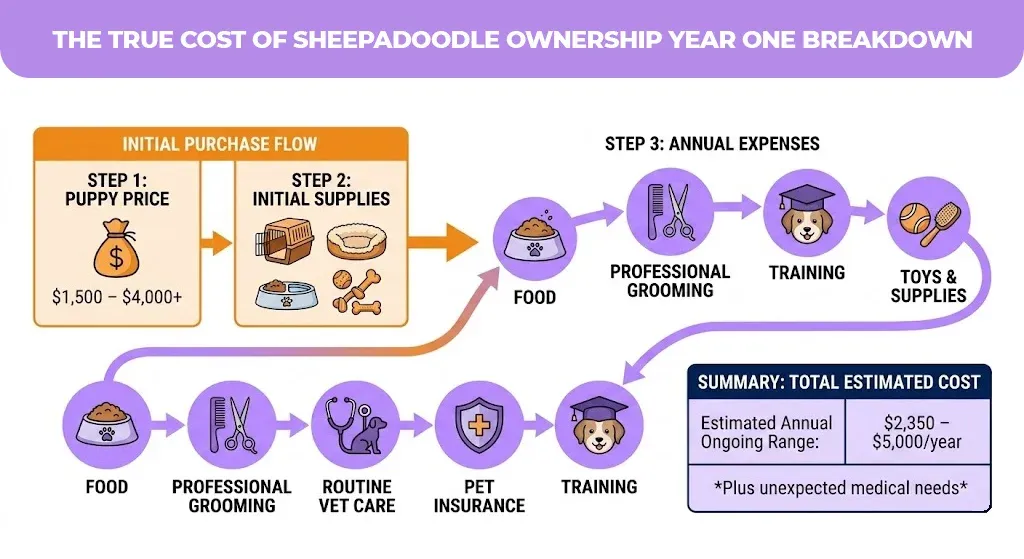
Sheepadoodle puppies from reputable breeders typically cost between $1,500 and $4,000. Annual ongoing costs — including food, grooming, vet care, and supplies — generally run $2,000–$4,500 per year depending on the dog’s size and your location.
Breeder reputation and health testing: Dogs from tested, well-established breeding programs cost more — and for good reason
Coat color: Rarer colors like merle or solid colors sometimes command a premium
Size: Mini sheepadoodles sometimes cost more than standards due to the complexity of the breeding program
Geographic location: Prices vary widely by region
| Expense Category | Estimated Annual Cost |
|---|---|
| Food (high-quality large breed) | $600 – $1,200 |
| Professional grooming (6–8 week intervals) | $600 – $1,300 |
| Routine veterinary care | $400 – $700 |
| Pet insurance | $400 – $800 |
| Training (especially year one) | $200 – $600 |
| Toys, bedding, supplies | $150 – $400 |
| Total Estimate | $2,350 – $5,000/year |
These numbers do not account for unexpected health expenses, which is exactly why pet insurance is worth serious consideration. A single emergency surgery can run $3,000–$8,000 or more.
This is one of the most common comparisons prospective owners make. Both are Poodle crosses, both are low-shedding, and both are wildly popular family dogs. The differences come down to temperament and energy levels.
| Trait | Sheepadoodle | Goldendoodle |
|---|---|---|
| Temperament | Calm, loyal, mildly protective | Outgoing, exuberant, social |
| Energy Level | Moderate to high | High |
| Trainability | Excellent | Excellent |
| Shedding | Low | Low to moderate |
| Standard Size | 65–85 lbs | 50–90 lbs |
| Coat Colors | Black, white, merle, brown | Gold, cream, apricot, red |
| Best For | Families wanting calmer energy | Highly social, active families |
The bottom line: if you want a dog that is a little more settled indoors and bonds deeply with your immediate family, the sheepadoodle has an edge. If you want a dog that is everyone’s best friend within minutes, the goldendoodle might be more your speed.
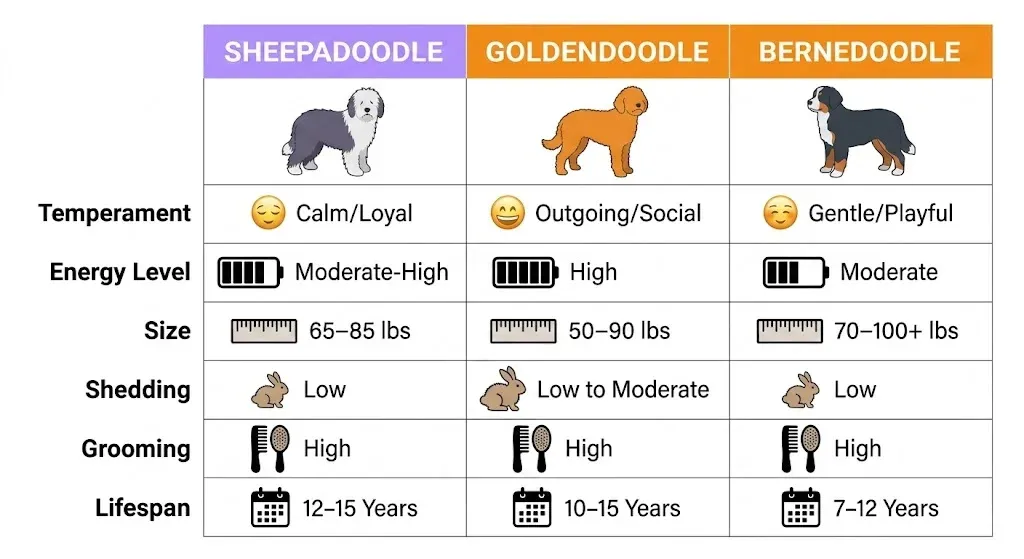
The bernedoodle, a cross between a Bernese Mountain Dog and a Poodle, shares significant overlap with the sheepadoodle. Both are large, fluffy, intelligent, and low-shedding. But there are meaningful differences worth knowing.
| Sheepadoodle | Bernedoodle |
|---|---|
| More energetic and playful | More laid-back and mellow |
| Slightly longer average lifespan | Handles cold weather better |
| More common color variety (incl. merle) | Iconic tri-color coat pattern |
| Often better in warmer climates | Can take longer to fully mature |
| Strong herding instinct may surface | Often described as “goofy” as puppies |
| Generally more affordable | Slightly higher average purchase price |
For active families with young children, the sheepadoodle usually wins. For families looking for a more relaxed, cuddly companion that does not need quite as much daily stimulation, the bernedoodle is worth serious consideration.
| Pros | Cons |
|---|---|
| Highly intelligent and easy to train | High grooming demands — time and cost |
| Deeply affectionate with family members | Expensive upfront purchase price ($1,500–$4,000+) |
| Low-shedding coat — better for allergy sufferers | Prone to separation anxiety |
| Excellent with children and other pets | Need significant daily exercise and mental stimulation |
| Adaptable to different living situations | Can become destructive when bored |
| Long lifespan of 12–15 years | Health testing of parents is essential but not universal |
| Great candidates for therapy and ESA roles | Size makes them unsuitable for very small spaces |
The sheepadoodle is, genuinely, an exceptional dog for the right family. Intelligent, affectionate, low-shedding, and strikingly beautiful — it is not hard to see why demand for this breed has exploded over the past decade. But that enthusiasm needs to be grounded in realistic expectations.
These dogs need consistent grooming, daily exercise, mental stimulation, and companionship. They are not low-maintenance pets by any measure. The families who thrive with sheepadoodles are the ones who go in with eyes open, aware of the time commitment, prepared for the grooming costs, and genuinely excited about an active, engaged relationship with their dog.
If that sounds like you, a sheepadoodle will likely be one of the best decisions you ever make. Doing your research before you buy is the most responsible thing you can do — for yourself and for the dog.
Sheepadoodles make outstanding emotional support animals. If your dog provides comfort, companionship, or emotional stability, you may qualify for an ESA letter — protecting your housing rights under the Fair Housing Act. Get connected with a licensed professional today.
Start Your ESA Application Today
Curious whether your pet could be recognized as an emotional support animal? It comes down to your own clinical need, not the breed — and a licensed professional is the only one who can make that call.
The biggest downsides are the grooming commitment and the separation anxiety risk. Sheepadoodles need brushing several times per week and professional grooming every 6–8 weeks, which adds up in both time and money. They also bond strongly with their families and can become anxious or destructive when left alone for extended periods. Their intelligence can backfire — a bored, under-stimulated sheepadoodle will find creative ways to entertain itself, often at the expense of your furniture.
Expect to pay between $1,500 and $4,000 for a sheepadoodle puppy from a reputable, health-testing breeder. Rarer coat colors, smaller mini sizes, and breeders in high-cost areas may charge at the top of that range or beyond. Be wary of prices significantly below $1,500; they often indicate a lack of health testing or a puppy mill situation. Beyond the purchase price, budget $2,000–$5,000 per year for food, grooming, routine vet care, and pet insurance.
Neither breed is objectively better; it depends on your lifestyle. Sheepadoodles tend to be calmer indoors and more protective of their families. Goldendoodles are typically more outgoing and social with strangers. Both are intelligent, trainable, and family-friendly. If you want a settled, loyal companion, lean toward the sheepadoodle. If you want a dog that is everyone’s best friend within minutes of meeting them, the goldendoodle may be the better match.
Sheepadoodles are generally more energetic and better suited to active families who can provide plenty of daily exercise. Bernedoodles tend to be more laid-back and patient, which can make them easier for families with very young children or less active lifestyles. Bernedoodles also handle cold climates better. If you live somewhere warm and love outdoor activities, the sheepadoodle is probably the stronger fit.
Yes, with some caveats. Their trainability makes them forgiving for first-time owners, but the grooming demands and exercise requirements can catch new owners off guard. Anyone considering a sheepadoodle should research grooming requirements thoroughly before committing, and be honest about how much daily time they can realistically dedicate to exercise and mental stimulation.
Sheepadoodles are not typically excessive barkers, but they will bark when strangers approach — a mild protective instinct inherited from the Old English Sheepdog parent. With proper socialization from puppyhood, most sheepadoodles learn appropriate bark thresholds quickly. Dogs left alone for long periods are more likely to develop nuisance barking as an expression of anxiety.

Licensed Psychotherapist
Darren is a leading expert in mental health advocacy and assistance animal documentation. He specializes in streamlining the process for obtaining ESA Letters, PSD Letters, and State-specific ESA compliance.

ESA Letters Issued

Successful Consultations

Licensed Therapist Network

Client Satisfaction Rate



Petesaletter.com helps you get your emotional support animal letter online with guidance and support.

Got Questions? Call us 24/7
Copyright © 2020-2026 Petesaletter All rights reserved. Terms | Privacy | Refund
Owned and Operated by Verimedix LLC