
Client Satisfaction Rate

Last Updated on: May 5, 2026
Reviewed by Darren Andrew Rafel
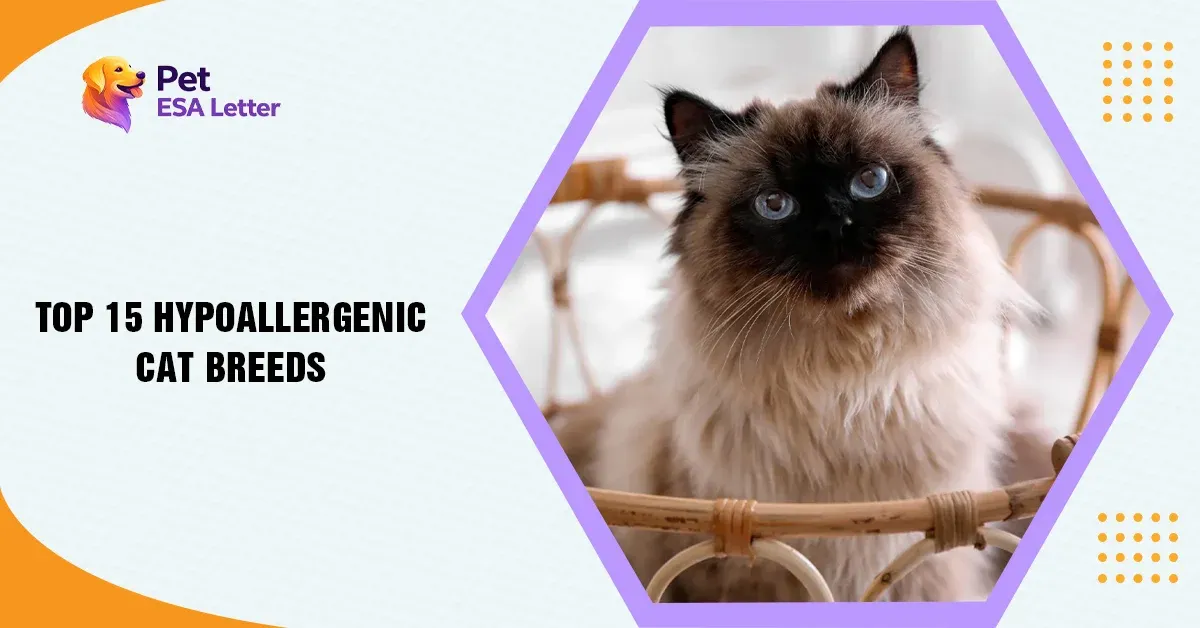
No cat breed is 100% hypoallergenic, but certain breeds produce significantly less of the Fel d 1 protein, the primary allergen found in cat saliva and skin oils. The most allergy-friendly cats include the Siberian, Balinese, Sphynx, Cornish Rex, and Russian Blue. Choosing one of these breeds, combined with proper home management, can make living with a cat entirely possible for most allergy sufferers. |
Picture this: you visit a friend’s house, their cat saunters over, and within minutes your eyes are burning and your nose won’t quit. It’s a familiar story for the 10–20% of the global population that reacts to cats. For many, the conclusion feels obvious: no cats, ever. But that conclusion is wrong.
Science has moved. Breeders have observed specific patterns. And for millions of allergy sufferers, finding the right breed has made all the difference. This guide cuts through the misinformation, explains the actual biology, and gives you a ranked, researched list of the best hypoallergenic cats available in 2026.
Here’s the thing most people get wrong: cat fur itself is not the primary allergen. The real culprit is a small, lightweight glycoprotein called Fel d 1 produced mainly in the cat’s sebaceous glands and salivary glands. Every time a cat grooms itself, Fel d 1-coated saliva gets deposited onto the fur and skin. When that fur or dried skin flakes (dander) becomes airborne, it carries the protein straight into your respiratory system.

Key fact: Fel d 1 is extraordinarily lightweight and electrostatically charged. According to veterinary immunology data, it can remain airborne for several hours and cling to walls, furniture, and clothing long after a cat has left the room. This is why even “hairless” breeds are not automatically allergen-free.
Two distinct mechanisms make certain breeds easier to tolerate:

In Our Observation Individual variation matters enormously. Two Siberian cats from different litters can produce measurably different Fel d 1 levels. A personal “trial visit” with a specific cat before adoption is the single most valuable step an allergy sufferer can take. |
These breeds are the most clinically meaningful choice for people with moderate-to-severe cat allergies, because they produce less of the Fel d 1 protein at the source.
These breeds reduce allergen exposure by distributing less fur and dander into your environment, a different mechanism, but a meaningful one.
These breeds offer allergy advantages through unusual coat structures or reduced grooming behaviors.
 PetESALetter
Verified
PetESALetter
Verified
Protect your housing rights with a legitimate, doctor-signed ESA letter. No pet deposit or breed restrictions.
This table addresses the most common search queries around specific breeds, including several popular cats that are frequently and incorrectly marketed as hypoallergenic.
Breed | Hypoallergenic? | Why / Why Not |
Siberian | Yes (Low Protein) | Naturally lower Fel d 1 output despite long coat |
Balinese | Yes (Low Protein) | Produces less Fel d 1 than most; single coat |
Sphynx | Yes (Low Fur) | No coat to trap saliva; needs regular bathing |
Russian Blue | Yes (Partial) | Dense coat traps dander; lower protein output |
Cornish Rex | Yes (Low Shed) | Wavy down-only coat sheds minimally |
Devon Rex | Yes (Low Shed) | Similar to Cornish Rex; very fine coat |
Bengal | Yes (Partial) | Pelt-like coat; less self-grooming required |
Oriental Shorthair | Yes (Partial) | Minimal grooming; low shedding |
Siamese | Yes (Partial) | Low-shedding and slightly lower Fel d 1 |
Javanese | Yes (Partial) | No undercoat; less airborne dander |
Ragdoll | No | Normal allergen levels; heavy long-fur shedder |
Maine Coon | No | Heavy shedder; standard protein levels |
Persian | No | High dander; high-maintenance grooming needs |
Note: “Partial” hypoallergenic status means the breed is likely to be more tolerable than average for allergy sufferers, but results vary significantly between individuals and specific cats.
Even the most hypoallergenic cat breed in the world benefits from an allergen-aware home setup. Based on consistently observed best practices in allergy management, here are the five interventions with the highest real-world impact:

Keep the bedroom strictly off-limits to your cat. You spend roughly 7–9 hours in that room every night. Protecting that space from Fel d 1 accumulation gives your immune system a long, consistent recovery window each day. A single week of enforcing this boundary, based on our observation of allergy-sufferer forums and community reports, produces a noticeable reduction in morning symptoms for most people.
A HEPA-grade air purifier (rated to capture particles as small as 0.3 microns) is one of the most effective tools available. Place one in the main living area and one in the bedroom. Run them continuously, not just during symptomatic episodes. Fel d 1 is airborne for hours continuous filtration is the only way to meaningfully reduce ambient levels.

Bathing your cat weekly removes surface Fel d 1 but only if done consistently. Wiping the cat down with a damp microfiber cloth daily between baths is lower-stress for both you and the cat and still removes a significant proportion of surface allergens. Always wash your hands (and ideally change clothes) after direct contact.
A relatively new development in veterinary nutrition: specialized cat foods containing anti-Fel d 1 antibodies (derived from chicken eggs immunized against the protein). According to veterinary nutrition data, these diets can reduce the active Fel d 1 in a cat’s saliva by up to 47% over several weeks. They represent a genuinely useful tool, particularly when combined with the environmental strategies above.
Hard flooring hardwood, tile, or laminate accumulates significantly less dander than carpet. If full replacement isn’t feasible, removing rugs from high-traffic areas makes a measurable difference. Pair this with a vacuum cleaner fitted with a HEPA filter (standard vacuums recirculate fine particles back into the air), and use enzyme-based cleaners on upholstered surfaces to break down Fel d 1 at the molecular level.

No breed eliminates allergen exposure entirely. That is the honest truth, and any source telling you otherwise is oversimplifying the science. What the right breed can do is reduce your exposure to a level your immune system can manage especially when combined with smart environmental choices.
The breeds on this list represent the strongest starting points based on available veterinary data, breeder observation records, and the real-world experience of allergy-sufferer communities. Your perfect match depends on your specific sensitivity level, lifestyle, and the individual cat.
Don’t let housing restrictions stop you. At Petesaletter, we provide a hassle-free process to get your official ESA letter, ensuring you and your hypoallergenic friend stay together.
There is no universal answer because individual cats vary in Fel d 1 production even within the same breed. That said, the Siberian is most consistently cited as the top choice for people seeking a low-protein producer, while the Sphynx is preferred by those who want to minimize shed fur. The Balinese sits in the middle, offering both low protein and low shedding.
We recommend a specific process rather than a specific breed: identify 2–3 candidates from the low-protein group (Siberian, Balinese, Russian Blue), contact a reputable breeder, and arrange at least two in-person visits of 30+ minutes each before committing. Allergen reactions are individual; the only definitive test is direct exposure to the specific cat you plan to adopt.
Pet dander (dried skin flakes) is not alive, so it cannot be “killed.” It can be removed and deactivated. HEPA air purifiers capture airborne particles. Enzyme-based cleaners (look for formulations containing protease) break down the Fel d 1 protein on surfaces. Regular HEPA vacuuming removes settled dander from floors and upholstery. Washing fabrics at 60°C (140°F) or higher also eliminates allergens from textiles.
Intact males produce the highest Fel d 1 levels. Neutered males and females produce broadly comparable levels, with some evidence that neutered males are slightly lower than unspayed females. For allergy sufferers, neutered males and spayed females are roughly equivalent and both are significantly preferable to intact males.
Yes, the Chartreux is famously silent, often described as nearly mute. The Scottish Fold, British Shorthair, and Russian Blue are also known for quiet temperaments. Interestingly, some of the most vocal breeds (Siamese, Oriental Shorthair) also rank among the more allergy-friendly options, so allergy sufferers may need to weigh noise tolerance against allergen levels..

Licensed Psychotherapist
Darren is a leading expert in mental health advocacy and assistance animal documentation. He specializes in streamlining the process for obtaining ESA Letters, PSD Letters, and State-specific ESA compliance.

ESA Letters Issued

Successful Consultations

Licensed Therapist Network

Client Satisfaction Rate



Petesaletter.com helps you get your emotional support animal letter online with guidance and support.

Got Questions? Call us 24/7






Copyright © 2020-2026 Petesaletter All rights reserved. Terms | Privacy | Refund
Owned and Operated by Verimedix LLC