ESA Laws
Georgia’s Emotional Support Animal Laws
Georgia’s Emotional Support Animal laws are designed to protect individuals with disabilities who rely on ESAs. The state adheres to federal guidelines like the Fair Housing Act (FHA) and the Air Carrier Access Act (ACAA) while also having specific regulations to ensure the proper use of ESA Letter to be issued documents. These laws cover housing protections, travel rights, and the standards for obtaining a legitimate ESA letter from a licensed mental health professional.
ESA Laws
Key Emotional Support Animal Laws in Georgia
Federal Housing Protection (FHA)
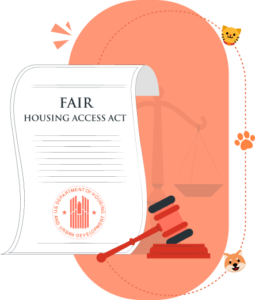
The Fair Housing Act protects individuals with emotional support animals. Under federal law, ESAs are allowed in most no-pet housing, and landlords must provide reasonable accommodations.
When Landlords Can Deny an ESA
According to HUD, a landlord may only deny an ESA if the animal poses a direct threat to others, causes significant property damage, or if valid documentation is not provided.
Workplace Rules for ESAs
Emotional support animals are not protected in the workplace under the ADA. Employers are not legally required to allow ESAs, though some may approve them as a voluntary accommodation.
Public Access & Travel Limits
ESAs do not have public access rights and are not recognized for free air travel. Businesses and airlines may treat ESAs as regular pets under their standard policies.
Benefits of ESA Law
Benefits of Georgia ESA Laws for ESA Owners
UNDERSTAND FEDERAL ESA LAW
The Fair Housing Act protects your right to live with an emotional support animal. Housing providers must offer reasonable accommodation when you present valid documentation. This rule applies even in buildings with strict no pet policies.
WHO QUALIFIES FOR PROTECTION
You qualify when a licensed mental health professional confirms your need for an emotional support animal. The law focuses on your disability related need, not the animal’s breed, size, or weight. Landlords cannot apply standard pet rules to an approved ESA.
LANDLORD RESPONSIBILITIES
Property owners must review ESA requests fairly and without delay. They cannot charge pet rent, pet deposits, or extra animal fees. They can only deny a request if the animal creates a direct safety risk or causes major property damage.
COMPLIANT ESA DOCUMENTATION
Housing providers can request a valid ESA letter for verification. The letter must come from a licensed professional and confirm your housing related need. Proper documentation helps prevent disputes and speeds up approval.
Georgia ESA Laws You Need to Know
Georgia’s ESA laws align with federal ESA law while implementing state-specific provisions for ESA owners and housing providers. These laws ensure fair access to housing for ESA owners and require valid documentation to prevent ESA fraud.
Fair Housing Act (FHA):
The FHA provides protection to ESA owners from housing discrimination, prohibiting landlords from denying housing based on the presence of an ESA. This also ensures that ESA owners are not charged additional pet fees or deposits.
Georgia State-Specific ESA Guidelines:
Georgia law requires ESA documentation to come from licensed mental health professionals (LMHP) who have a legitimate relationship with the client.
Housing Accommodations:
Under Georgia law, landlords must accommodate ESAs, even in no-pet properties, if the tenant provides proper ESA Letter to be issued documentation. Landlords cannot impose additional fees or breed restrictions on ESAs.
Key Housing Protections for ESA Owners in Georgia
Under both federal and state law, individuals with ESAs have rights when it comes to housing. These rights include protection from discrimination and the prohibition of additional fees or deposits.
Reasonable Housing Accommodations:
Landlords must allow tenants to keep their ESAs, even in properties with no-pet policies, as long as the tenant provides a legitimate ESA Letter to be issued.
No Pet Fees or Deposits:
Georgia law protects ESA owners from being charged additional fees or deposits that are typically associated with pets.
No Breed or Size Restrictions:
Landlords cannot deny accommodation based on the breed, size, or weight of the ESA.