Important Information About ESA Letters in South Carolina
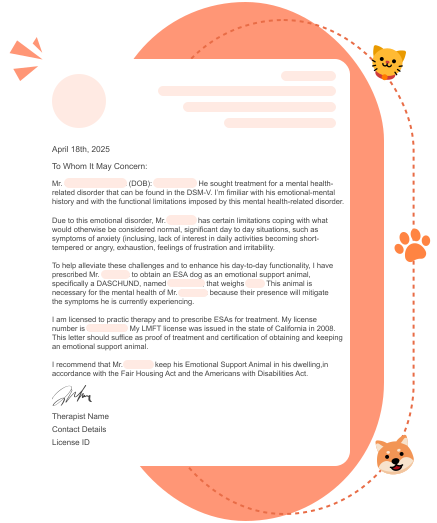
Obtaining an emotional support animal (ESA) letter in South Carolina is a crucial step for anyone who relies on their companion animal for emotional or mental support. A valid ESA letter, issued by a licensed mental health professional, provides legal protections under both the Fair Housing Act (FHA) and South Carolina-specific housing laws.
With this letter, your ESA is recognized as more than just a pet, allowing you to:
Live in housing with your ESA: Landlords must provide reasonable accommodations, even in properties with strict “no-pet” policies.
Avoid extra pet fees: Housing providers cannot charge additional deposits or monthly pet rent for your ESA.
Protect your rights: Your ESA letter serves as official documentation confirming the necessity of your emotional support animal.
ESA Letter
How to Get an ESA Letter in South Carolina
Complete Your Pre Screening
Fill out a quick, confidential questionnaire about your mental health needs and how your animal provides emotional support.
Therapist Review & Approval
Your therapist will determine if an Emotional Support Animal is a vital part of your treatment plan for conditions like anxiety, depression.
Consultation with a Licensed Therapist
Speak with a licensed mental health professional (LMHP) who is specifically licensed to practice in South Carolina. They will evaluate your needs in accordance with AB 468 requirements.
Receive Your Official ESA Letter
Once approved, you’ll receive your signed ESA letter on official letterhead. Your letter will be fully compliant with the Fair Housing Act and South Carolina state laws, ready for your landlord.
Benefits of ESA LETTER
THE BENEFITS OF HAVING AN ESA LETTER
SECURE YOUR HOUSING FREEDOM
Live with your emotional support animal in any housing, even those with "no-pet" policies. Under the Fair Housing Act, your ESA is a necessity, not a pet.
NO PET DEPOSITS OR FEES
Save money every month. A valid ESA letter exempts you from paying monthly pet rent, one-time pet deposits, or application fees for your animal.
ENJOY PEACE OF MIND
Reduce the stress of housing applications. With a legal ESA letter, you have the confidence of knowing your right to live with your companion is protected by law.
COMPLIANCE WITH SC STATE LAWS
Stay fully protected under SC AB 468. Our letters are issued by licensed therapists to meet all state and local housing regulations.
South Carolina follows federal laws, such as the Fair Housing Act (FHA), to protect emotional support animal (ESA) owners. It’s also important to understand how the Americans with Disabilities Act (ADA) and local laws affect ESA rights to ensure you maintain full legal protections in the state.
Housing Laws & Your Emotional Support Animal
Under the FHA, South Carolina residents with a valid ESA letter from a licensed mental health professional are legally entitled to live with their emotional support animal, even in housing units that normally prohibit pets.
Key protections include:
No extra fees or deposits: Landlords cannot charge additional pet fees for your ESA.
Reasonable accommodations: Housing providers must allow your ESA unless the animal poses a threat to others or causes significant property damage.
Fair treatment: The FHA ensures that ESA owners receive equal access to housing without discrimination.
Employment Guidelines for ESAs
Emotional support animals are not automatically covered under the ADA for workplace accommodations. While employers in South Carolina are not required to allow ESAs at work, some may choose to permit them if proper documentation is provided. Approval is at the discretion of the employer.
Public Access Rules for ESAs
Unlike service animals, ESAs do not have automatic access to public places where pets are restricted. Under South Carolina law H5041, intentionally misrepresenting an ESA as a service animal is illegal and can result in fines between $350–$1,000 or other penalties. Always follow local regulations when bringing your ESA to public areas to avoid complications.
Frequently Asked Questions
Can a landlord deny an ESA in South Carolina?1/8
Generally, no. Under the South Carolina Fair Housing Law and the federal Fair Housing Act, landlords must provide reasonable accommodations for ESAs. A Petesaletter allows you to bypass "no-pet" policies. Denials are only permitted if the animal is a direct threat to safety, causes significant property damage, or if the landlord is exempt (such as owner-occupied buildings with 3 or fewer units).
Are there penalties for fake ESA letters in SC?2/8
Yes. S.C. Code § 47-3-980 makes it unlawful to intentionally misrepresent an animal as a service animal to obtain disability-related rights. Falsely claiming your ESA is a task-trained service dog for public access can result in civil fines up to $1,000 for repeat offenses. Petesaletter protects you by ensuring your evaluation is performed by a real, state-licensed clinician, providing 100% legitimate housing documentation.
Do ESA letters expire in South Carolina?3/8
Yes. To ensure your therapeutic need is ongoing, South Carolina housing providers typically require a Petesaletter to be dated within the last 12 months. We offer a streamlined annual renewal process to keep your housing protections active and your documentation compliant with both state and federal fair housing guidelines.
Are pet fees waived for ESAs in South Carolina?4/8
Yes. In South Carolina, an ESA is legally an assistance animal, not a pet. With a Petesaletter, you are exempt from pet rent, non-refundable pet fees, and pet deposits. You remain liable for any physical damage the animal causes to the property, but the standard financial barriers associated with pets are removed.
Who can write an ESA letter in South Carolina?5/8
A valid letter must be issued by a Licensed Mental Health Professional (LMHP) authorized to practice in South Carolina. This includes psychologists, psychiatrists, LCSWs, or LPCs. Petesaletter connects you with providers who include their SC license number on the documentation, which South Carolina landlords can and often do verify through the state licensing board.
Can I take my ESA to public places in SC?6/8
No. South Carolina law (S.C. Code § 47-3-920) distinguishes between ESAs and service animals. While task-trained service dogs have full public access, ESAs are protected in housing only. Your Petesaletter guarantees your right to live with your animal, but businesses like restaurants or stores are not legally required to admit your ESA.
Are there breed or weight limits for ESAs in SC?7/8
No. Under HUD and South Carolina Fair Housing guidelines, housing providers cannot apply generalized breed, weight, or size restrictions to an ESA. If you have a valid Petesaletter, a landlord cannot reject a large dog or a specific breed unless that individual animal has a documented history of aggression.
Can I have more than one ESA in South Carolina?8/8
Yes. You can have multiple ESAs if your Petesaletter clinician justifies the disability-related need for each specific animal. The letter must explain how each animal provides unique support for your condition. While multiple animals are allowed, the request must remain "reasonable" based on the size of the dwelling.
3k+
ESA Letters Issued
2k
Successful Consultations
50 States
Licensed Therapist Network
99.99%
Client Satisfaction Rate
NEWS LETTER
Subscribe To Our Newsletter
Petesaletter.com helps you get your emotional support animal letter online with guidance and support.