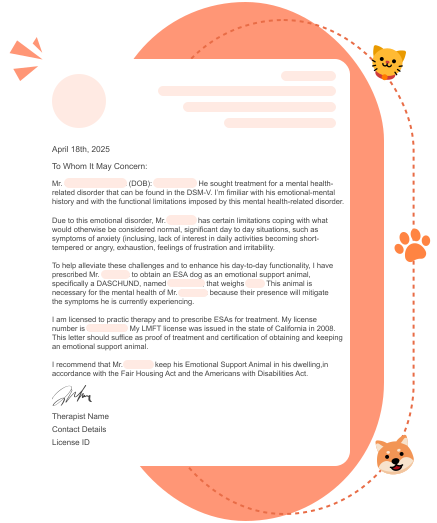
In Pennsylvania, emotional support animals (ESAs) are protected under federal housing laws, giving qualified ESA owners important rights and legal protections. While Pennsylvania does not have separate, expanded state-specific ESA statutes, residents are covered under the Fair Housing Act (FHA), which ensures equal housing opportunities for individuals with qualifying mental health conditions who rely on emotional support animals.
These protections allow ESA owners to live with their support animals in housing that may otherwise have no-pet policies, helping ensure stable and supportive living environments.
Regulations for ESA Owners in Pennsylvania
Below is an overview of the key ESA regulations that apply in Pennsylvania:
Legal Housing Protections
The Fair Housing Act (FHA) requires landlords and housing providers to make reasonable accommodations for tenants with valid ESA letters. This means you can keep your emotional support animal even in properties that normally restrict or prohibit pets.
Housing providers also cannot:
Charge pet fees, pet rent, or additional pet deposits
Enforce breed or weight restrictions on ESAs
Deny housing solely because you have an emotional support animal
Pennsylvania-Specific ESA Regulations
Pennsylvania follows federal FHA guidelines for emotional support animals. Landlords are legally required to provide reasonable accommodations to qualified tenants with valid ESA documentation from a licensed mental health professional. These rules help prevent housing discrimination and ensure fair treatment for individuals who depend on ESAs for emotional or psychological support.
Avoid Pet Fees and Restrictions
With a valid ESA letter in Pennsylvania, your emotional support animal is not considered a regular pet for housing purposes. This means you are exempt from standard pet policies, including pet fees, breed bans, and size limitations.
It’s important to note that public access rights for ESAs are not the same as those for service animals. Emotional support animals do not have automatic access to public places such as restaurants, stores, or airplanes. Additionally, under the Americans with Disabilities Act (ADA), employers are not required to allow ESAs in the workplace, although some employers may choose to accommodate them voluntarily.