ESA Letter
The Importance of an ESA Letter in California
Living in California with an Emotional Support Animal (ESA) shouldn’t be a legal headache. Under the Fair Housing Act and California state law, a valid ESA letter from a licensed mental health professional ensures you can live with your companion—even in “no-pet” housing—without paying extra deposits or fees.
Whether you’re in Los Angeles, San Francisco, or San Diego, our process is fully compliant with AB 468 regulations. We provide legally recognized documentation that protects your rights statewide and beyond, making the path to housing security simple and stress-free.

ESA Letter
How to Get an ESA Letter in California
Complete Your Pre Screening
Fill out a quick, confidential questionnaire about your mental health needs and how your animal provides emotional support.
Therapist Review & Approval
Your therapist will determine if an Emotional Support Animal is a vital part of your treatment plan for conditions like anxiety, depression.
Consultation with a Licensed Therapist
Speak with a licensed mental health professional (LMHP) who is specifically licensed to practice in California. They will evaluate your needs in accordance with AB 468 requirements.
Receive Your Official ESA Letter
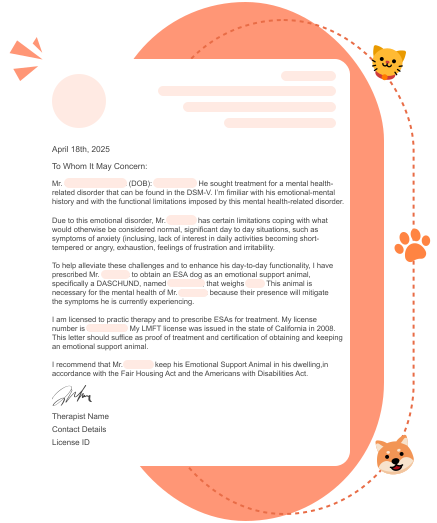
Once approved, you’ll receive your signed ESA letter on official letterhead. Your letter will be fully compliant with the Fair Housing Act and California state laws, ready for your landlord.
Benefits of ESA LETTER
THE BENEFITS OF HAVING AN ESA LETTER
SECURE YOUR HOUSING FREEDOM
Live with your emotional support animal in any housing, even those with "no-pet" policies. Under the Fair Housing Act, your ESA is a necessity, not a pet.
NO PET DEPOSITS OR FEES
Save money every month. A valid ESA letter exempts you from paying monthly pet rent, one-time pet deposits, or application fees for your animal.
ENJOY PEACE OF MIND
Reduce the stress of housing applications. With a legal ESA letter, you have the confidence of knowing your right to live with your companion is protected by law.
COMPLIANCE WITH CA STATE LAWS
Stay fully protected under California’s AB 468. Our letters are issued by licensed therapists to meet all state and local housing regulations.
California ESA Laws & Your Rights
Navigating California’s Emotional Support Animal (ESA) laws requires understanding both federal and state protections. While the federal Fair Housing Act (FHA) provides a baseline, California reinforces these rights through the California Disabled Persons Act and the Unruh Civil Rights Act, which protect residents from discrimination based on mental or emotional health needs.
Housing Protections: Your Rights as a Tenant
Under the FHA and California’s Fair Employment and Housing Act (FEHA), individuals with a valid ESA letter possess specific legal advantages:
“No-Pet” Policy Waivers: You are legally permitted to live with your ESA even in housing that typically prohibits animals.
Exemption from Fees: Landlords are prohibited from charging “pet rent,” security deposits for animals, or application fees for an ESA.
Legal Limitations: A landlord may only deny accommodation if the specific animal poses a direct threat to the safety of others or causes substantial physical damage to the property.
Workplace and Public Access
It is important to distinguish between ESAs and Service Dogs to avoid legal complications:
In the Workplace: While the ADA does not mandate ESA access in offices, California law is often more flexible. Many employers provide “reasonable accommodation” for ESAs if it supports an employee’s documented mental health needs.
Public Spaces: Unlike Psychiatric Service Dogs (PSDs), ESAs do not have automatic access to restaurants, malls, or theaters. Representing an ESA as a service animal in California is a legal offense punishable by fines.
Legislative Update: Understanding AB 468
Since January 2022, California has enforced Assembly Bill 468 (AB 468) to ensure the legitimacy of ESA documentation. This is often referred to as the “California 30-Day Rule.”
The 30-Day Requirement: To obtain a valid ESA letter in California, you must establish a client-provider relationship with a licensed mental health professional for at least 30 days prior to the issuance of the letter. This law ensures that your documentation is based on a genuine clinical assessment.