ESA Letter
Why You Need Alabama ESA Letter
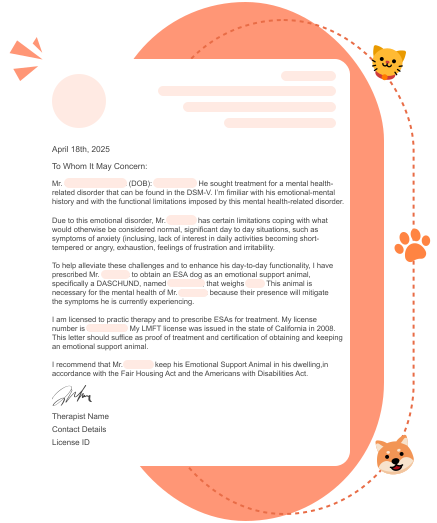
In Alabama, emotional support animal (ESA) owners must have a valid ESA letter to request housing accommodations. This official documentation, issued by a licensed mental health or healthcare professional, allows you to qualify for protections under the Fair Housing Act (FHA).
With a proper ESA letter, you can live with your emotional support animal even in housing communities that enforce strict no-pet policies. Landlords are required to make reasonable accommodations and cannot charge standard pet-related fees for your ESA.
ESA Letter
How to Get an ESA Letter in Alabama
Complete Your Pre Screening
Fill out a quick, confidential questionnaire about your mental health needs and how your animal provides emotional support.
Therapist Review & Approval
Your therapist will determine if an Emotional Support Animal is a vital part of your treatment plan for conditions like anxiety, depression.
Consultation with a Licensed Therapist
Speak with a licensed mental health professional (LMHP) who is specifically licensed to practice in Alabama. They will evaluate your needs in accordance with AB 468 requirements.
Receive Your Official ESA Letter
Once approved, you’ll receive your signed ESA letter on official letterhead. Your letter will be fully compliant with the Fair Housing Act and Alabama state laws, ready for your landlord.
Benefits of ESA LETTER
THE BENEFITS OF HAVING AN ESA LETTER
SECURE YOUR HOUSING FREEDOM
Live with your emotional support animal in any housing, even those with "no-pet" policies. Under the Fair Housing Act, your ESA is a necessity, not a pet.
NO PET DEPOSITS OR FEES
Save money every month. A valid ESA letter exempts you from paying monthly pet rent, one-time pet deposits, or application fees for your animal.
ENJOY PEACE OF MIND
Reduce the stress of housing applications. With a legal ESA letter, you have the confidence of knowing your right to live with your companion is protected by law.
Why You Need an ESA Letter in Alabama
Stay fully protected under Florida AB 468. Our letters are issued by licensed therapists to meet all state and local housing regulations.
Understanding Emotional Support Animal Laws in Alabama
Knowing your legal rights as an emotional support animal (ESA) owner in Alabama helps ensure you are protected from discrimination and unnecessary housing restrictions. While most ESA protections come from federal law, they apply fully to Alabama residents.
Below is a clear overview of the key ESA-related laws and policies in Alabama.
Fair Housing Act (FHA) Protections in Alabama
Under the Fair Housing Act (FHA), Alabama residents with a valid emotional support animal letter are entitled to reasonable housing accommodations. This means you can live with your emotional support animal even in housing that enforces strict no-pet policies.
These protections include:
Landlords cannot charge pet fees, pet rent, or additional deposits for ESAs
Housing providers must allow your ESA unless it poses a direct threat to others
ESAs may only be denied if they cause significant property damage that cannot be reasonably reduced
Protection from housing discrimination related to your disability or ESA
These federal rules apply across Alabama and help ensure equal access to housing for ESA owners.
Employment Laws in Alabama
The Americans with Disabilities Act (ADA) does not recognize emotional support animals as service animals. As a result, Alabama employers are not legally required to allow ESAs in the workplace.
However, some employers may choose to approve an ESA as a voluntary accommodation. These decisions are made at the employer’s discretion and may require documentation supporting your request.
Public Access Laws in Alabama
Emotional support animals do not have the same public access rights as service animals in Alabama. ESAs are generally not permitted in public places where pets are restricted, including:
Restaurants
Retail stores
Grocery stores
Government buildings
Misrepresenting an emotional support animal as a trained service animal is illegal in Alabama and may result in fines of up to $500. Following public access laws helps protect your rights and prevents legal issues.